- Follow On:
- [email protected]
- +918655715397
- Thane west, Maharashtra - 400604
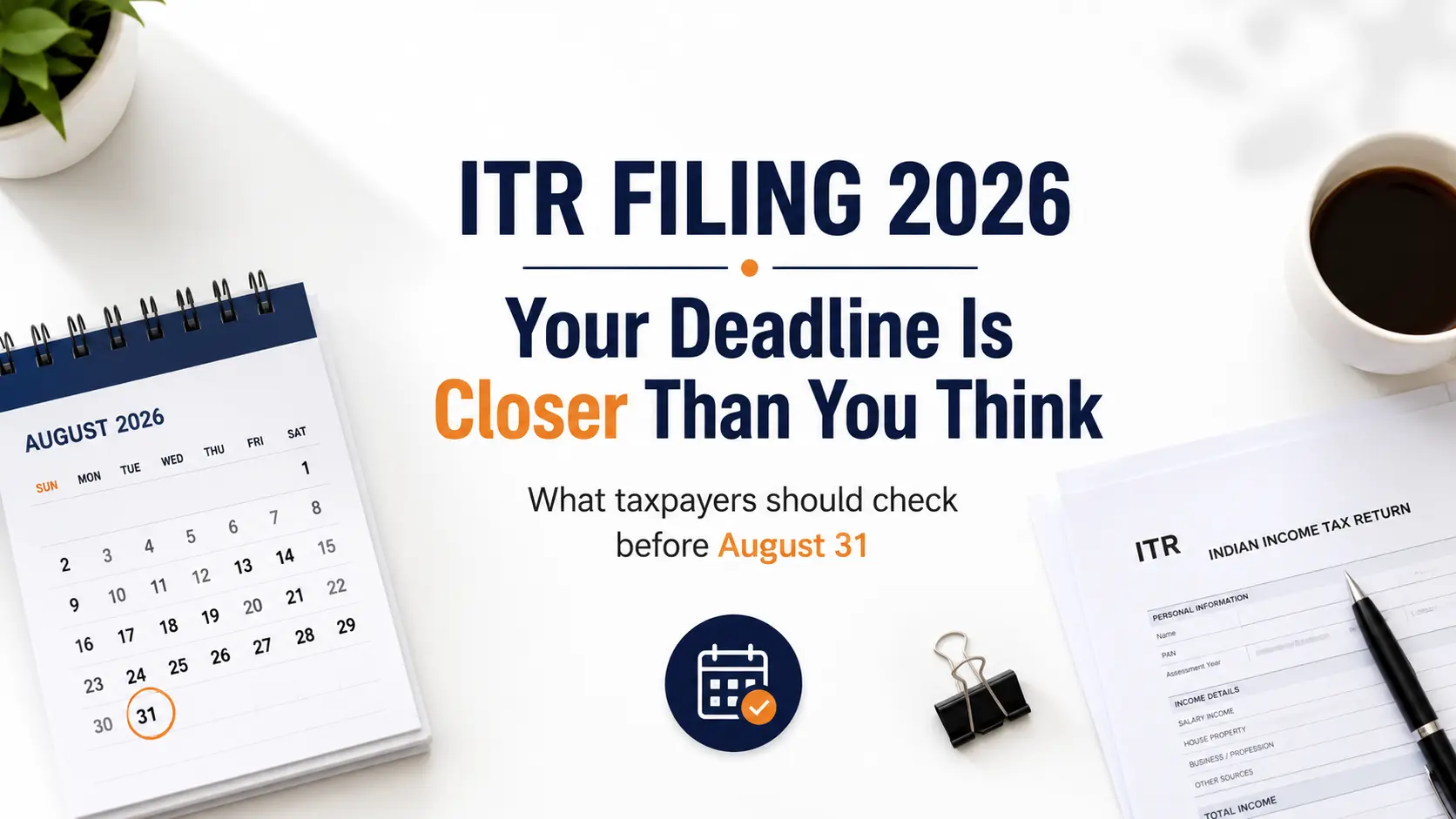
The August 31, 2026 ITR deadline is approaching for taxpayers with business or professional income who are not required to get their accounts audited. This deadline mainly covers eligible taxpayers filing forms such as ITR-3 and ITR-4, while other categories have later deadlines.
For AY 2026-27, taxpayers are filing returns for income earned during FY 2025-26. The Income Tax Department has clarified that these returns continue to be governed by the Income-tax Act, 1961, despite the new Income Tax Act, 2025 coming into force from April 2026.
The August 31 deadline applies mainly to taxpayers with business or professional income who are not subject to tax audit and fall under applicable ITR forms such as ITR-3 and ITR-4.
The important dates are:
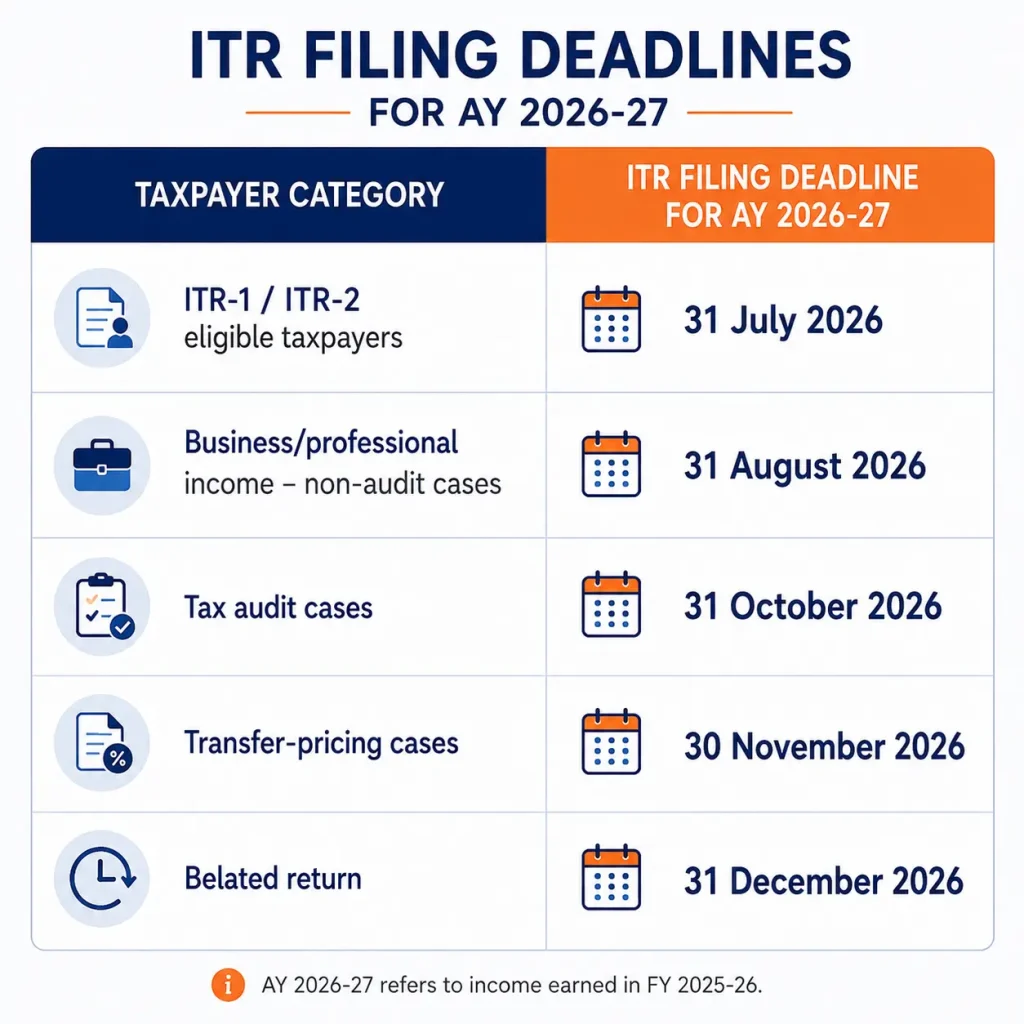
The exact deadline depends on the taxpayer’s income, applicable ITR form and audit requirements.
Missing the applicable due date does not mean you can no longer file your return. For AY 2026-27, a belated return can generally be filed up to 31 December 2026, or before completion of assessment, whichever is earlier.
However, filing late can result in:
So, the belated-return window should not be treated as an extension of the original deadline.
Under Section 234F of the Income-tax Act, 1961, applicable to AY 2026-27, the late filing fee is:
Interest may also apply where tax remains unpaid.
Taxpayers whose accounts are required to be audited generally have a later ITR deadline of October 31, 2026. Certain taxpayers covered by transfer-pricing provisions generally get until November 30, 2026.
This additional time is linked to the requirement to complete audit and related compliance work; it is not a general extension available to everyone.
This is particularly important during the 2026 transition.
The return being filed now for AY 2026-27 relates to income earned during FY 2025-26 and continues under the Income-tax Act, 1961.
Income earned from April 1, 2026 to March 31, 2027 falls under Tax Year 2026-27 and will be filed after that tax year ends.
The deadline is more than a date on the tax calendar. Filing on time can help taxpayers:
For businesses and professionals, timely filing is also important for maintaining accurate financial and tax records.
Businesses and professionals not subject to tax audit should review their accounts and complete their ITR before August 31, 2026.
Businesses requiring tax audit generally have until October 31, 2026, giving additional time for audit completion and return preparation.
Businesses should reconcile income, expenses, TDS/TCS, advance tax and information available in their tax statements before submitting the return.
Although a belated return remains possible until December 31, late filing can create additional costs and compliance complications.
Certain losses may not be eligible for carry-forward when the return is filed late, making timely filing particularly important for businesses and investors.
Businesses should retain supporting documents, books of accounts, tax payment records and reconciliations in case additional clarification is required later.
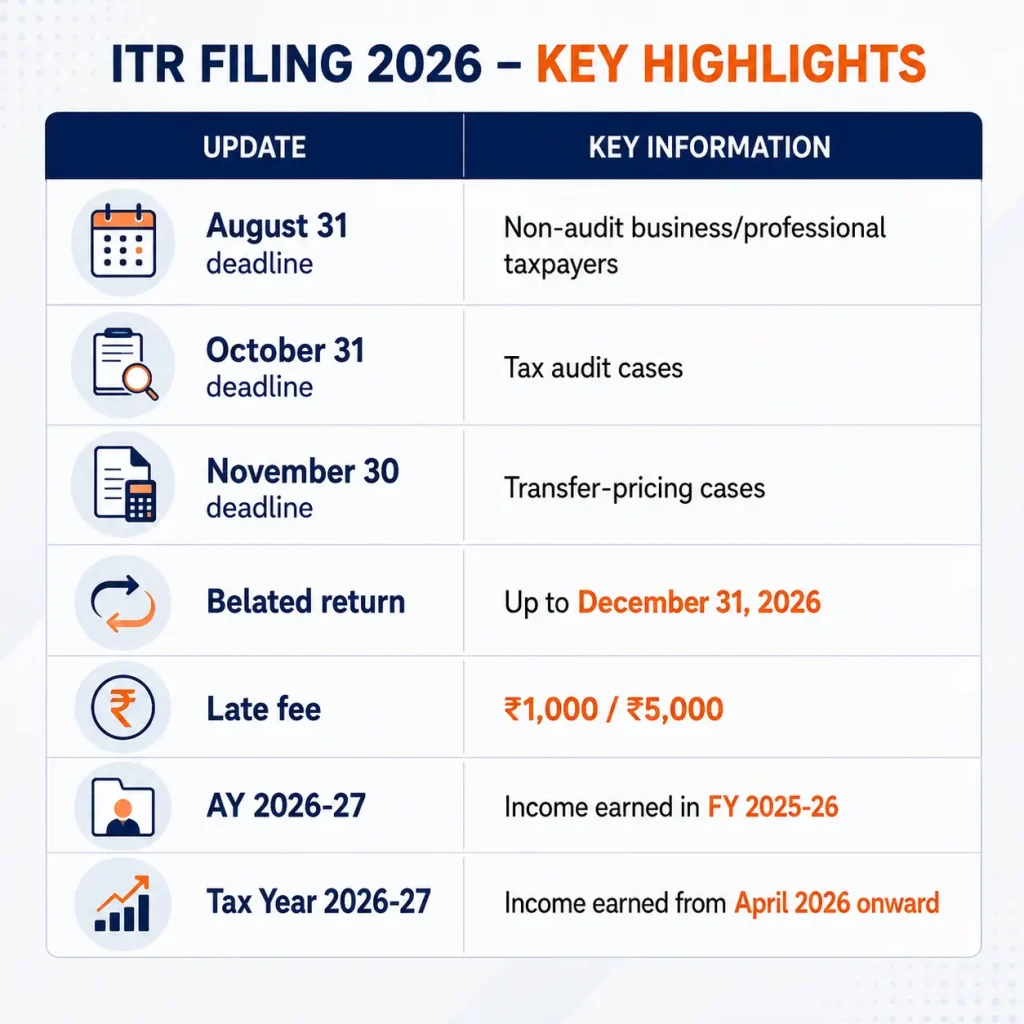
Before submitting your ITR, review:
The Income Tax Department also advises taxpayers to keep income, expenses, TDS and advance-tax information clearly separated between FY 2025-26 and Tax Year 2026-27 during the transition to the new tax framework.
Taxpayers should pay particular attention to:
The August 31 deadline highlights why timely tax preparation and financial reconciliation are important for businesses and professionals.
While eligible non-audit taxpayers still have time until August 31, waiting until the final days can increase the risk of errors, missing documents and filing delays. Businesses should complete their books, reconcile tax information and review their ITR before submission rather than relying on the belated filing window.
Businesses can strengthen their tax compliance process by:
✓ Maintaining updated books of accounts
✓ Reconciling TDS/TCS regularly
✓ Reviewing AIS and tax records
✓ Planning tax payments in advance
✓ Checking ITR forms before filing
✓ Maintaining proper supporting documentation
Timely tax compliance can help businesses reduce avoidable costs and stay prepared for regulatory requirements.
Subscribe to our newsletter and stay updated.