- Follow On:
- [email protected]
- +918655715397
- Thane west, Maharashtra - 400604
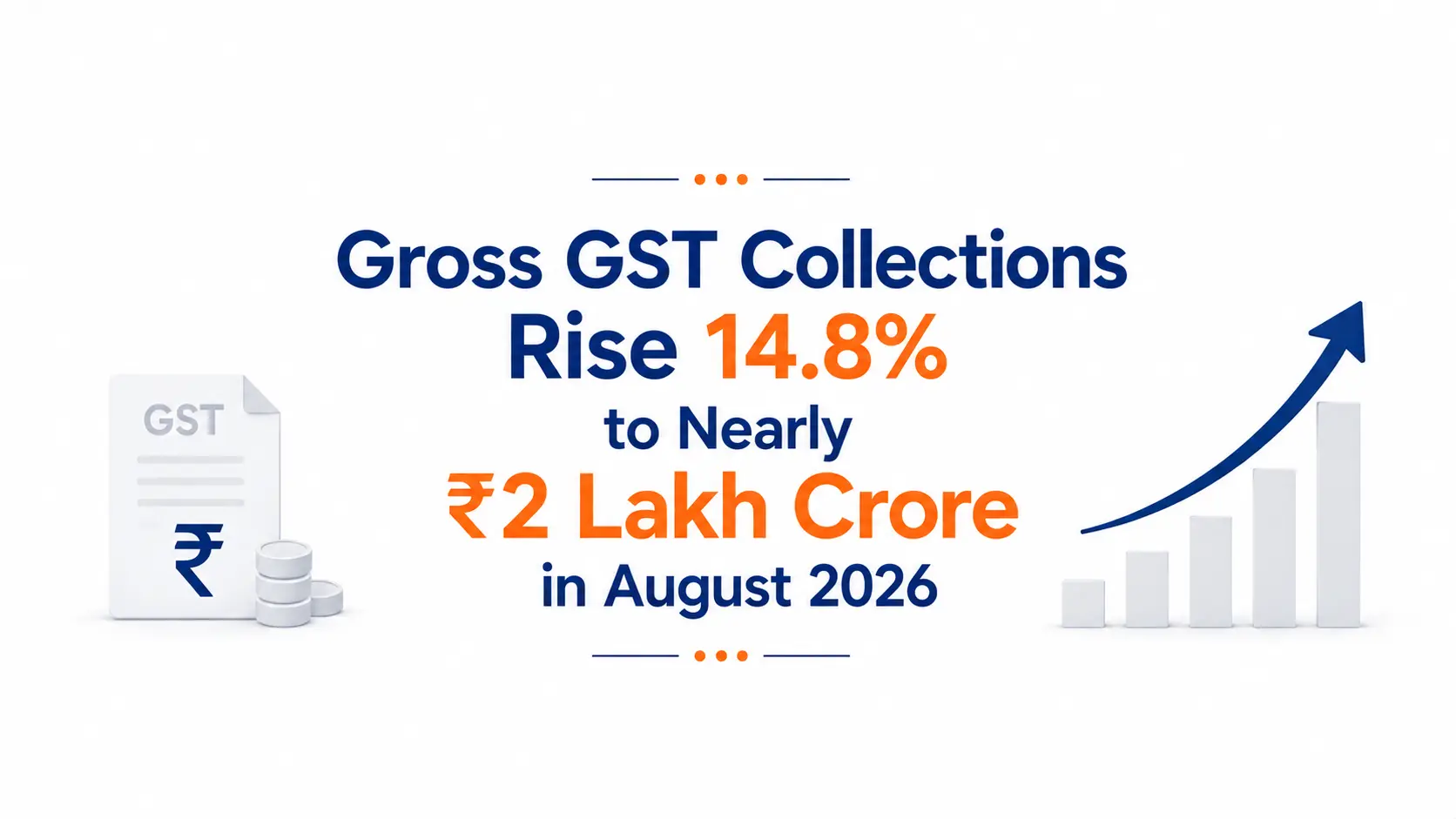
India’s GST collections remain strong as domestic transactions and import-related revenue drive growth
India’s gross Goods and Services Tax (GST) collections increased 14.8% year-on-year to ₹1,99,853 crore in August 2026, compared with ₹1,74,116 crore in August 2025. The latest figures indicate continued strength in tax collections, supported by domestic economic activity and a sharp increase in GST revenue from imports.
The August numbers also come against the backdrop of 7.8% GDP growth in the June quarter of FY27, indicating continued economic activity despite global trade and geopolitical uncertainties.
GST revenue from domestic transactions increased 9.3% to ₹1,37,249 crore in August 2026. This indicates continued activity across India’s domestic consumption and business ecosystem.
GST revenue from imports recorded a much stronger 29% year-on-year growth, reaching ₹62,604 crore.
The stronger import component was an important contributor to the overall increase in gross GST collections.
GST refunds rose sharply to ₹31,795 crore, an increase of about 68% year-on-year.
As a result, net GST collections grew at a slower 8.3%, reaching ₹1,68,057 crore
The positive trend is not limited to August.
During April–August 2026, India’s gross GST collections reached approximately ₹10.43 lakh crore, registering 11% growth over the corresponding period of the previous year.
Net GST revenue during the same period increased about 9% to ₹8.90 lakh crore, while cumulative refunds rose approximately 23.8% to ₹1.53 lakh crore.
This suggests that GST revenue has maintained a relatively consistent growth trajectory during the first five months of FY27.
The latest GST numbers have several implications for businesses operating in India.
Strong GST collections indicate continued formalisation and tax compliance. Businesses should ensure that GST returns, invoices, input tax credit records and reconciliations remain accurate and up to date.
With import-related GST revenue growing 29%, businesses involved in imports should pay particular attention to:
The significant increase in refunds makes GST refund tracking increasingly important for eligible businesses.
Businesses should regularly monitor pending refunds, supporting documentation and reconciliation between GST returns and accounting records.
As GST systems become increasingly data-driven, mismatches between books, invoices, GST returns and tax-credit records can create unnecessary compliance issues.
Businesses can use the latest GST collection trend as an opportunity to review their tax and financial processes.
Key areas to check:
A strong monthly reconciliation process can help businesses identify discrepancies before they develop into larger compliance issues.
The latest GST numbers provide another indicator of India’s economic activity.
August gross GST collections increased 14.8% year-on-year, while GDP had recorded 7.8% growth in the April–June quarter of FY27. The combination suggests that economic activity and tax collections have remained resilient.
However, the composition of GST growth is also important. Import-related GST grew considerably faster than domestic GST revenue, meaning businesses should look beyond the headline ₹2 lakh crore figure and monitor the underlying revenue components.
The 57th GST Council meeting is scheduled for September 12, 2026, with an officers’ meeting scheduled for September 11. Businesses should monitor any decisions that could affect GST rates, compliance procedures or sector-specific requirements.
With refunds rising substantially, businesses should monitor whether refund processing, working-capital requirements and reconciliation processes need improvement.
Businesses dependent on imported goods, raw materials or capital equipment should closely evaluate the impact of import-related GST and corresponding input tax credit.
As GST data becomes increasingly integrated across invoices, returns and transaction records, accurate and timely reporting will remain critical.
Businesses should not look at GST collection growth only as an economic indicator. It also highlights the importance of maintaining strong tax controls.
Before the next GST filing cycle, businesses should:
A structured GST reconciliation process can help reduce errors, improve compliance visibility and support better working-capital management.
The latest GST collection numbers reinforce the growing importance of accurate, connected and timely financial data for businesses.
As tax systems become increasingly data-driven, manual reconciliation across accounting records, invoices, GST returns and transaction data can increase the risk of discrepancies.
For businesses, the focus should therefore move beyond simply filing GST returns to building stronger tax-data controls, automated reconciliations and reliable reporting processes.
Businesses should regularly review their GST processes to identify:
Better GST data management can help businesses improve compliance, reduce manual effort and gain greater visibility over their financial operations.
Subscribe to our newsletter and stay updated.