- Follow On:
- [email protected]
- +918655715397
- Thane west, Maharashtra - 400604
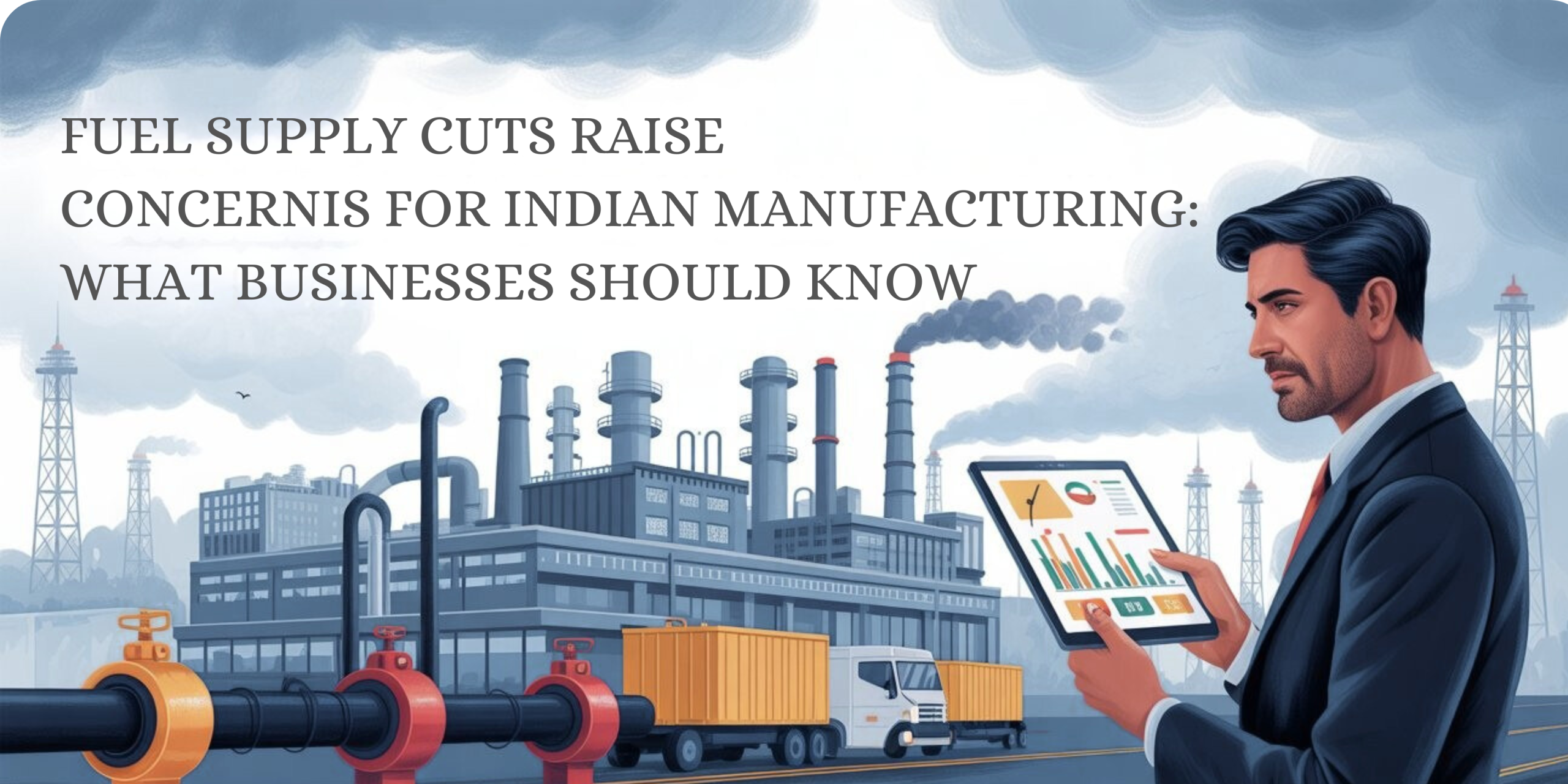
India’s manufacturing sector is facing fresh operational concerns as natural gas and LPG supply disruptions begin to impact industrial operations. Recent reports suggest that supply cuts to commercial and industrial users are being implemented as authorities prioritize household consumption amid global energy disruptions.
While the government has assured that essential supplies remain stable, reduced gas allocation for industries could affect manufacturing output, supply chains, and production costs across sectors.
For businesses, the situation highlights the importance of operational resilience, energy diversification, and strategic planning.
One of the key drivers behind the current fuel disruption is the geopolitical tension affecting global energy supply routes, particularly in the Middle East. Shipping disruptions through major energy corridors have created supply constraints and price volatility worldwide.
India, one of the largest importers of LPG and natural gas, has responded by:
These adjustments are intended to stabilize the domestic energy supply chain.
Gas supply reductions could have ripple effects across multiple industrial sectors that rely heavily on gas-based energy.
Industries using natural gas for production processes—such as chemicals, glass, ceramics, fertilizers, and auto components—may experience slower production cycles if supply constraints persist. Some manufacturing units have already reported operational disruptions due to reduced fuel availability.
Fuel shortages can increase operational costs and delay production schedules, potentially affecting supply chains for downstream industries.
In certain industrial clusters, production levels have dropped significantly as companies adjust to reduced energy availability, highlighting the vulnerability of energy-dependent manufacturing ecosystems.
Commercial LPG shortages are also affecting restaurants, food processing units, and hospitality businesses, with some establishments forced to reduce operations or modify menus due to limited gas availability.
The disruption in supply routes and limited availability may also push energy prices upward, increasing manufacturing costs and squeezing margins for businesses already managing inflationary pressures.
To address supply concerns, authorities have taken several steps:
Officials maintain that domestic LPG stocks remain adequate, and efforts are underway to stabilize supply chains and reduce dependency on vulnerable routes.
The situation underscores several strategic considerations for companies:
Businesses may need to explore alternative energy sources such as electricity, LNG, renewable energy, or hybrid fuel systems to reduce dependency on a single fuel supply.
Manufacturers should evaluate contingency plans to manage production schedules and energy consumption during supply disruptions.
Energy volatility can impact operational budgets, making cost optimization and financial planning critical for sustaining profitability.
Companies may need to strengthen supply chain planning to ensure continuity during fuel shortages or logistical disruptions.
At Wisecor, we believe events like the current gas supply disruption highlight the need for strategic risk planning and operational agility.
Businesses should focus on:
✔ Strengthening financial planning and cost forecasting
✔ Building resilient supply chains
✔ Integrating energy-efficient processes
✔ Aligning operational strategies with global economic developments
In an increasingly interconnected global economy, companies that prepare for volatility are better positioned to maintain stability and growth.
Subscribe to our newsletter and stay updated.