- Follow On:
- [email protected]
- +918655715397
- Thane west, Maharashtra - 400604
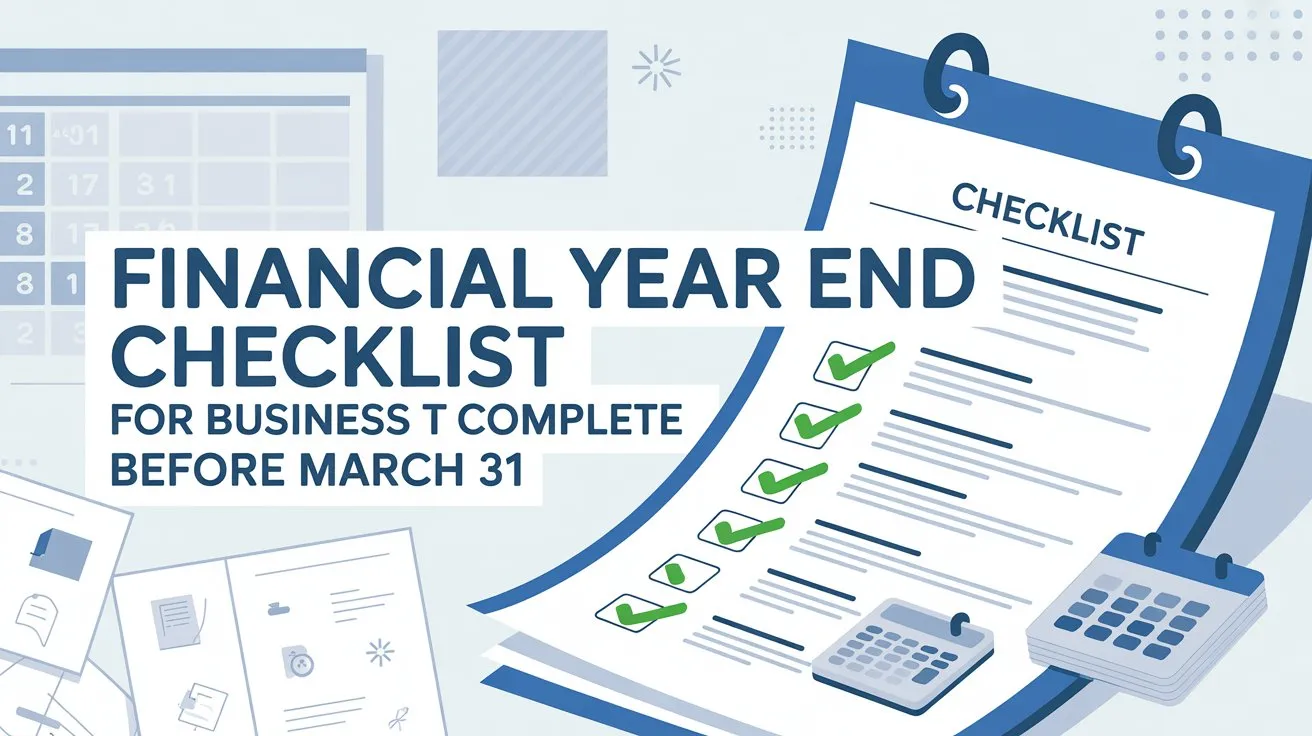
Closing the financial year is not just an accounting formality. It is the final opportunity for businesses to correct financial records, optimize tax liability, and ensure full compliance with regulatory requirements. Even small gaps during this period can lead to penalties, missed deductions, or audit complications later.
A structured year end checklist helps businesses stay organized and avoid last minute pressure. With proper planning, companies can improve financial accuracy, reduce risks, and enter the next financial year with clarity and control.
Advance tax should be reviewed carefully before the financial year ends. Businesses need to ensure that their total tax liability is accurately estimated and that the payments made throughout the year are sufficient to cover this liability.
This involves comparing the estimated tax liability with the advance tax already paid and identifying any shortfall well in time. If there is a gap, it should be cleared before mid March rather than waiting until the last date. Timely action helps avoid unnecessary pressure and last minute errors.
Even a small delay in paying advance tax can lead to interest charges, which continue to accumulate over time. This makes advance tax review one of the most critical steps in year end financial preparation.
Tax saving investments play an important role in reducing the overall tax burden. Before March 31, businesses and individuals should carefully review their contributions to eligible instruments and check whether the available deduction limit has been fully utilized.
If there is any gap, additional investments can be made within the remaining time to maximize tax benefits. Since unused deductions cannot be carried forward to the next financial year, taking timely action is essential for effective tax planning and better financial management.
GST compliance requires continuous monitoring, but year end is the time to ensure all filings are complete and accurate. Any pending returns or mismatches can create issues later.
Proper reconciliation helps avoid compliance notices and ensures accurate reporting of tax liability.
Annual GST reporting requires consistency across all monthly filings. Preparing early ensures that errors are identified and corrected before final submission.
Businesses should review turnover, tax liability, and filing data for the entire year. Cross checking monthly returns helps ensure that there are no inconsistencies. Early preparation also reduces last minute workload and improves reporting accuracy.
TDS compliance requires regular monitoring. Any delay in deduction or deposit can lead to penalties and increased scrutiny. Businesses must review all transactions where TDS is applicable and ensure proper compliance.
Maintaining discipline in TDS compliance reduces financial and legal risks.
Many businesses miss deadlines for TDS returns, which leads to continuous accumulation of late fees. Before closing the financial year, it is important to review past filings and identify any pending returns from earlier quarters. Any missed returns should be filed immediately, while data for the current quarter should be prepared in advance to avoid last minute delays.
Taking timely action not only helps reduce penalties but also ensures smoother and more efficient compliance management.
7.Closure of Books of Accounts
Closing books is one of the most important steps in financial year end activities. Proper closure ensures that financial statements are accurate and ready for reporting.
Businesses should focus on reconciling all accounts, recording pending transactions, and verifying balances. Delays in book closure often create complications during audits and tax filing.
A clean closure makes the entire financial reporting process more efficient.
8.Verification of Form 26AS and Financial Data
Financial data reported to authorities must always match internal records to ensure accuracy and compliance. Before filing returns, businesses should review tax statements carefully to verify tax credits and deductions and compare reported income with their books of accounts. This process helps identify any discrepancies early and allows corrections to be made in time. Early verification not only improves the accuracy of tax reporting but also reduces the risk of notices and scrutiny from authorities.
9.Selection of Suitable Tax Regime
Choosing the right tax regime is essential for optimizing tax liability. Businesses should evaluate available options before finalizing their returns.
A careful comparison helps businesses make informed financial decisions.
Certain expenses are allowed only when they are actually paid within the financial year. Delayed payments can impact tax deductions.
Businesses should review all outstanding vendor dues and clear eligible payments before March 31. This ensures that expenses are properly accounted for and tax benefits are not lost.
Employee related statutory compliance must be updated before the financial year closes. Delays in contributions can lead to interest and penalties.
Maintaining compliance in employee related obligations is essential for smooth operations.
Accurate payroll processing depends on proper employee documentation. Investment declarations must be collected and verified before closing the year.
This step ensures correct tax reporting and avoids discrepancies in payroll records.
Businesses must also ensure that all corporate compliance requirements are fulfilled. This includes statutory filings and regulatory obligations.
Ignoring corporate compliance can result in penalties and operational restrictions.
14.Update of GST Registration Details
Business registration details must remain accurate at all times. Any outdated information can lead to missed notices or compliance issues.
Keeping records updated ensures smooth communication with authorities.
Year end is not only about closing the current year but also preparing for the next phase of growth. Businesses should use this time to evaluate performance and set future goals.
Planning ahead helps businesses start the new financial year with better control and clear direction.
The financial year end is a critical phase that requires careful execution. Businesses that follow a structured checklist can avoid penalties, improve financial accuracy, and strengthen compliance.
From tax planning to documentation and reporting, every step contributes to building a stable financial system. A disciplined approach ensures not only smooth closure but also a strong foundation for future growth.
What is the most important task before March 31
Advance tax payment and compliance checks are the most critical tasks to avoid penalties.
Why is year end financial preparation important
It ensures accurate reporting, reduces errors, and supports regulatory compliance.
How can businesses avoid last minute errors
By following a structured checklist and completing tasks in advance.
What happens if deadlines are missed
Businesses may face penalties, interest charges, and increased audit risk.
When should preparation begin
Ideally, businesses should start at least one month before March 31.
Subscribe to our newsletter and stay updated.