- Follow On:
- [email protected]
- +918655715397
- Thane west, Maharashtra - 400604
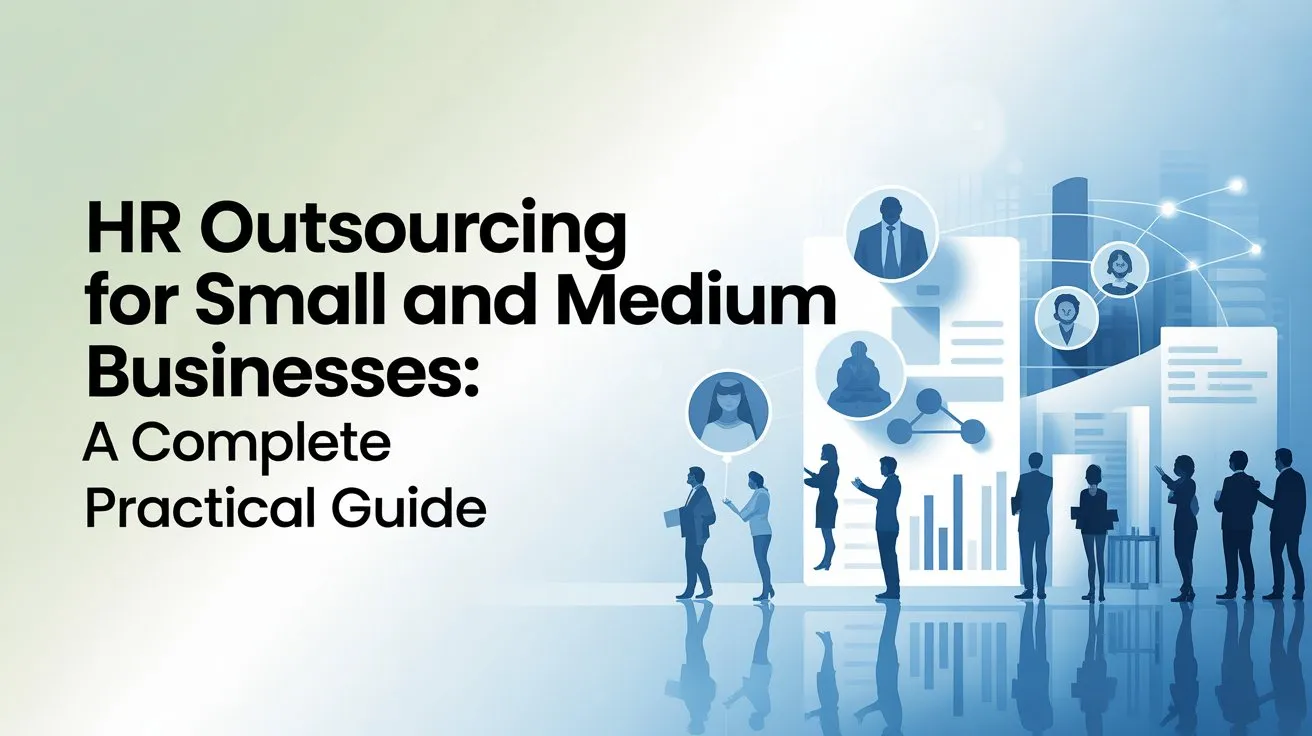
HR management is one of the most critical yet complex functions for small and medium businesses. As companies grow, managing recruitment, payroll, compliance, and employee engagement becomes increasingly time consuming. Many businesses struggle to balance operational priorities with HR responsibilities, which often leads to inefficiencies and compliance risks.
This is where HR outsourcing for small and medium businesses becomes relevant. Instead of handling everything internally, companies can delegate HR functions to specialized service providers. This allows business owners and management teams to focus on core activities while ensuring that HR processes are handled professionally and efficiently.
For growing organizations, outsourcing HR is not just about reducing workload. It is about gaining access to expertise, improving compliance, and creating a structured approach to workforce management. Understanding how HR outsourcing works and when to adopt it is essential for making the right decision.
HR outsourcing refers to the process of delegating human resource functions to an external service provider. These functions may include payroll processing, recruitment, employee documentation, compliance management, and performance tracking.
For small and medium businesses, HR outsourcing provides access to experienced professionals without the need to build a large in house HR team. The service provider manages day to day HR operations while ensuring compliance with labor laws and regulatory requirements.
The process typically begins with identifying which HR functions need to be outsourced. Businesses can choose to outsource specific tasks such as payroll or opt for complete HR management. Once implemented, the outsourcing partner works closely with the company to manage employee related processes in a structured and consistent manner.
Small and medium businesses often operate with limited resources. Managing HR internally can become overwhelming, especially when the workforce starts expanding.
One of the primary reasons businesses choose HR outsourcing is to reduce administrative burden. Handling payroll, compliance, and employee records requires time and accuracy. Outsourcing helps ensure these tasks are managed efficiently.
Another key factor is access to expertise. HR outsourcing providers stay updated with changing regulations and industry practices. This helps businesses avoid compliance issues and reduces the risk of penalties.
Cost efficiency is also a major advantage. Instead of hiring and training a full HR team, businesses can access professional services at a predictable cost. This makes HR outsourcing a practical solution for companies aiming to optimize resources.
HR outsourcing is flexible and can be customized based on business needs. Companies can choose to outsource specific functions or the entire HR process.
Commonly outsourced HR functions include:
Outsourcing these functions helps businesses maintain consistency and accuracy in HR operations. It also ensures that processes are aligned with regulatory requirements and industry standards.
Cost control is a key concern for small and medium businesses. HR outsourcing helps reduce costs in several ways without compromising efficiency.
Maintaining an in house HR team involves expenses such as salaries, training, software, and infrastructure. Outsourcing eliminates many of these fixed costs and converts them into manageable service fees.
Additionally, outsourcing reduces the risk of costly errors. Mistakes in payroll or compliance can lead to penalties and financial losses. With professional oversight, businesses can avoid such risks and ensure smooth operations.
Another important aspect is productivity. When internal teams are not burdened with administrative HR tasks, they can focus on strategic and revenue generating activities. This improves overall business efficiency.
Compliance is one of the most critical areas where small and medium businesses face challenges. Labor laws, tax regulations, and employee related rules are constantly evolving. Keeping up with these changes can be difficult without dedicated expertise.
HR outsourcing helps businesses stay compliant by ensuring that all processes align with current regulations. From payroll taxes to employee benefits and statutory filings, outsourcing partners manage these responsibilities with accuracy.
It also reduces risk by implementing structured processes and internal checks. Proper documentation, timely filings, and consistent reporting minimize the chances of errors and legal complications. For businesses, this means fewer disruptions and greater peace of mind.
Employee experience plays a major role in business success. Efficient HR processes directly impact how employees perceive the organization.
With HR outsourcing, routine tasks such as payroll processing, leave management, and documentation are handled smoothly. This reduces delays and improves transparency, leading to higher employee satisfaction.
Outsourcing also allows businesses to implement better HR practices. Structured onboarding, performance tracking, and clear policies contribute to a more organized work environment. When employees feel supported and valued, productivity naturally improves.
While HR outsourcing offers several advantages, businesses should also be aware of potential challenges. One of the common concerns is reduced direct control over HR processes.
Communication gaps can also arise if expectations are not clearly defined. Businesses must ensure that the outsourcing partner understands their requirements and company culture.
Another challenge is data security. Since HR involves sensitive employee information, it is important to work with providers that follow strong data protection practices.
Despite these challenges, most issues can be managed with proper planning, clear communication, and choosing the right outsourcing partner.
Selecting the right partner is crucial for successful HR outsourcing. Businesses should evaluate providers based on experience, expertise, and reliability.
It is important to understand the range of services offered and whether they align with business needs. A good outsourcing partner should provide flexible solutions that can scale as the business grows.
Transparency and communication are equally important. Businesses should ensure that reporting systems, response time, and support structure are clearly defined.
Checking client reviews, industry experience, and compliance knowledge can also help in making an informed decision. A well chosen partner can significantly improve HR efficiency and business performance.
Deciding whether to outsource HR depends on the specific needs and stage of the business. For small and medium businesses experiencing growth, outsourcing can be a practical solution.
If HR tasks are consuming too much time or if compliance challenges are increasing, outsourcing can help bring structure and efficiency. It allows businesses to focus on core operations while ensuring that HR functions are managed professionally.
However, businesses should evaluate their requirements carefully. A balanced approach, where critical functions are outsourced while maintaining strategic control internally, often works best.
HR outsourcing for small and medium businesses is more than just a cost saving strategy. It is a way to streamline operations, improve compliance, and enhance employee experience. As businesses grow, managing HR internally can become complex and time consuming.
By outsourcing HR functions, companies gain access to expertise, reduce administrative burden, and improve overall efficiency. From payroll management to compliance and employee engagement, outsourcing creates a structured approach to workforce management.
For businesses looking to scale effectively, HR outsourcing provides the flexibility and support needed to handle growth with confidence. With the right partner and strategy, it can become a valuable part of long term business success.
HR outsourcing for small businesses involves delegating HR functions such as payroll, recruitment, and compliance to external experts to improve efficiency and reduce workload.
Yes, it helps reduce the cost of hiring and maintaining an in house HR team while ensuring professional management of HR functions.
HR outsourcing ensures that businesses follow labor laws and regulatory requirements, reducing the risk of penalties and legal issues.
Businesses should look for experience, service flexibility, strong communication, compliance knowledge, and positive client feedback when selecting a provider.
Subscribe to our newsletter and stay updated.