- Follow On:
- [email protected]
- +918655715397
- Thane west, Maharashtra - 400604
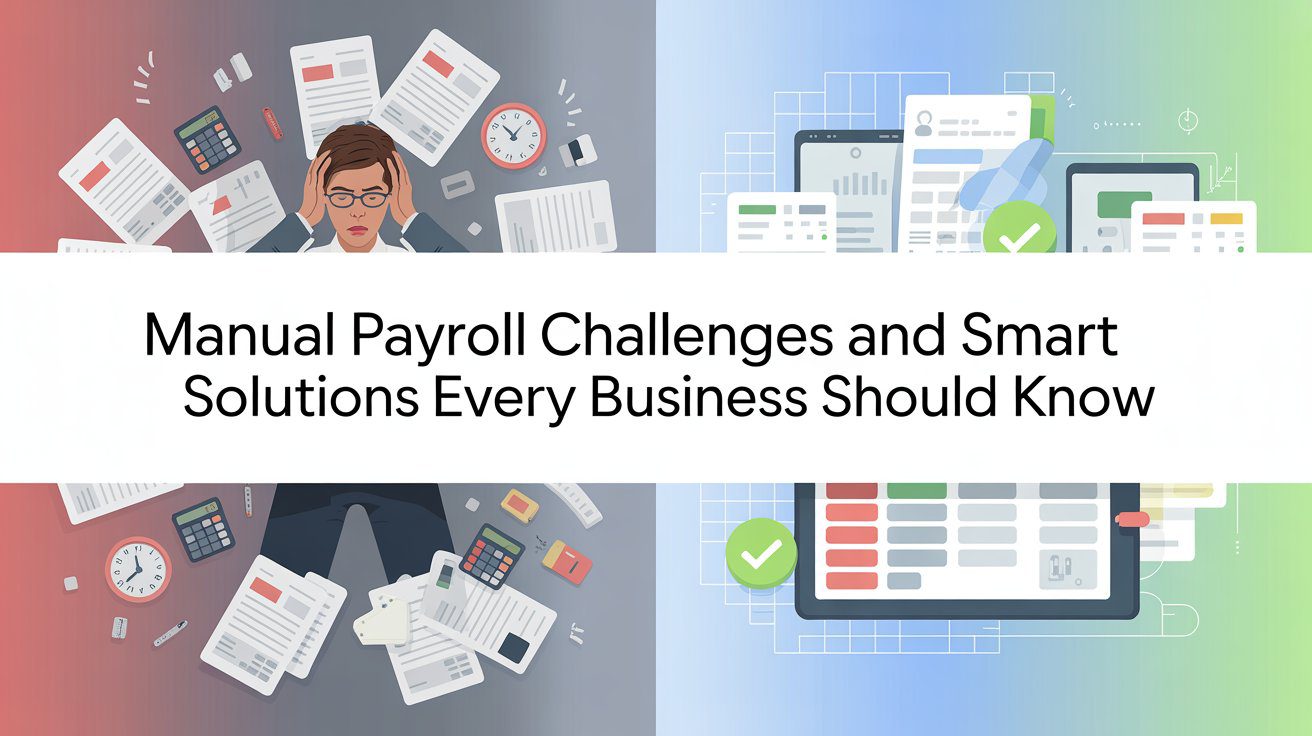
Payroll is one of the most critical functions in any business, yet many organizations still rely on manual processes. While this approach may seem manageable in the early stages, it often becomes complex and error prone as the business grows. From salary calculations to compliance requirements, manual payroll can create inefficiencies that impact both operations and employee satisfaction.
As businesses deal with increasing workforce size and regulatory complexity, the need for smarter payroll solutions becomes more evident. Understanding the challenges of manual payroll and exploring better alternatives can help organizations improve accuracy, save time, and ensure compliance.
Manual payroll involves handling calculations, record keeping, and compliance without automated systems. This process can quickly become overwhelming, especially when dealing with multiple employees and varying salary structures. Businesses often struggle to maintain consistency and accuracy as operations grow.
Managing large volumes of employee data, handling multiple salary components and deductions, and keeping track of compliance requirements make the process complex. As this complexity increases, the chances of errors and delays also rise, making manual payroll inefficient for growing businesses.
Errors are one of the biggest risks associated with manual payroll processing. Even small mistakes in calculations or data entry can lead to significant issues that affect both employees and the organization.
Incorrect salary payments, miscalculated tax deductions, and compliance penalties are common outcomes of manual errors. These issues not only affect financial accuracy but also reduce employee trust. Over time, repeated errors can damage the credibility of payroll management within the organization.
Payroll compliance involves following statutory regulations such as tax deductions, employee benefits, and reporting requirements. Managing these obligations manually requires constant attention and regular updates, which can be difficult without proper systems.
Keeping up with changing laws and regulations, meeting strict filing deadlines, and maintaining accurate records for audits are ongoing challenges. Without a structured approach, businesses may miss important updates or deadlines, leading to penalties and legal complications.
Manual payroll processing is time consuming and repetitive. Tasks such as data entry, calculations, and verification require significant effort from HR and finance teams, reducing overall efficiency. This increases workload on internal teams, causes delays in payroll processing, and limits focus on strategic activities. Instead of contributing to business growth, teams spend valuable time managing routine payroll tasks.
Handling payroll data manually increases the risk of mismanagement. Since payroll includes sensitive employee and financial information, any errors in handling can create serious problems. Data duplication, missing entries, lack of proper organization, and difficulty in retrieving information are common issues. Poor data management can lead to inaccuracies in reporting and complications during audits or compliance checks.
To overcome the limitations of manual payroll, businesses are adopting smarter alternatives such as payroll software and outsourcing solutions. These approaches help streamline operations and reduce dependency on manual work.
Automated payroll systems ensure accurate calculations, cloud based solutions provide real time access to data, and outsourcing services offer expert handling of payroll tasks. These solutions simplify payroll management, improve accuracy, and ensure timely compliance.
Payroll automation is one of the most effective alternatives to manual processing. It reduces repetitive data entry and ensures that calculations are performed using predefined rules, which improves consistency across payroll tasks.
With automated systems, businesses can calculate salaries, deductions, and taxes accurately while also generating payslips and reports instantly. This reduces dependency on manual intervention and minimizes the chances of human error.
Automation brings consistency to payroll processing and improves overall efficiency. It also speeds up workflows, allowing businesses to complete payroll on time without delays.
Payroll outsourcing is a practical solution for businesses facing difficulties with manual processes. By working with external experts, organizations can shift payroll responsibilities to professionals who specialize in compliance and payroll management.
This approach provides access to experienced professionals, reduces compliance risks, and helps save time and operational costs. It also ensures that payroll is handled accurately and in line with current regulations.
Outsourcing allows internal teams to focus on core business activities while ensuring that payroll operations run smoothly and efficiently.
Moving away from manual payroll to automated or outsourced solutions offers several advantages. Businesses can improve accuracy, reduce operational risks, and create more efficient payroll processes.
These solutions help in achieving faster payroll processing, better compliance with regulations, and reduced administrative workload. As a result, organizations experience smoother operations and improved employee satisfaction.
Overall, adopting modern payroll methods helps businesses manage payroll more effectively and with greater confidence.
Transitioning to automated payroll requires careful planning and a structured approach. Businesses need to evaluate their current payroll processes and identify areas where improvements are necessary.
This includes reviewing existing systems, selecting suitable automation tools or outsourcing partners, and preparing teams for the change. Proper training and system testing are important to ensure a smooth transition.
A gradual implementation helps businesses adapt to new systems without disrupting daily operations, making the transition more effective and manageable.
Before selecting a payroll solution, businesses should evaluate their specific needs and operational requirements. The right choice depends on factors such as company size, payroll complexity, and compliance requirements.
It is important to consider the level of automation required, the system’s ability to handle compliance updates, and the security of sensitive payroll data. Scalability is also a key factor, especially for growing businesses.
Choosing the right solution ensures that payroll processes remain efficient, secure, and aligned with long term business goals.
Managing payroll manually may seem manageable in the early stages, but it becomes increasingly complex as businesses grow. Challenges such as errors, compliance risks, time consumption, and data mismanagement can affect both operations and employee trust.
Smarter alternatives like payroll automation and outsourcing provide effective solutions to these challenges. They improve accuracy, reduce workload, and ensure compliance with regulations. By adopting these modern approaches, businesses can streamline payroll processes and focus on growth.
In today’s fast moving business environment, relying on manual payroll is no longer practical. Organizations that shift to smarter solutions gain better control, improved efficiency, and long term stability.
What are the main challenges of manual payroll processing
Manual payroll involves errors, compliance risks, time consumption, and data management issues, making it inefficient for growing businesses.
How does payroll automation help businesses
Payroll automation improves accuracy, speeds up processing, and reduces manual workload by handling calculations and reporting automatically.
Is payroll outsourcing better than manual payroll
Outsourcing provides expert support, ensures compliance, and reduces internal workload, making it a more efficient alternative.
Can small businesses benefit from payroll automation
Automation tools are scalable and cost effective, making them suitable for small and medium businesses.
What are the risks of manual payroll errors
Errors can lead to incorrect salary payments, tax issues, compliance penalties, and reduced employee trust.
How can businesses improve payroll efficiency
By adopting automation, outsourcing payroll functions, and implementing structured payroll processes.
What factors should be considered when choosing payroll software
Businesses should consider features, compliance support, ease of use, data security, and scalability.
Why is payroll compliance important
Payroll compliance ensures that businesses follow legal requirements, avoid penalties, and maintain accurate financial records.
Subscribe to our newsletter and stay updated.