- Follow On:
- [email protected]
- +918655715397
- Thane west, Maharashtra - 400604
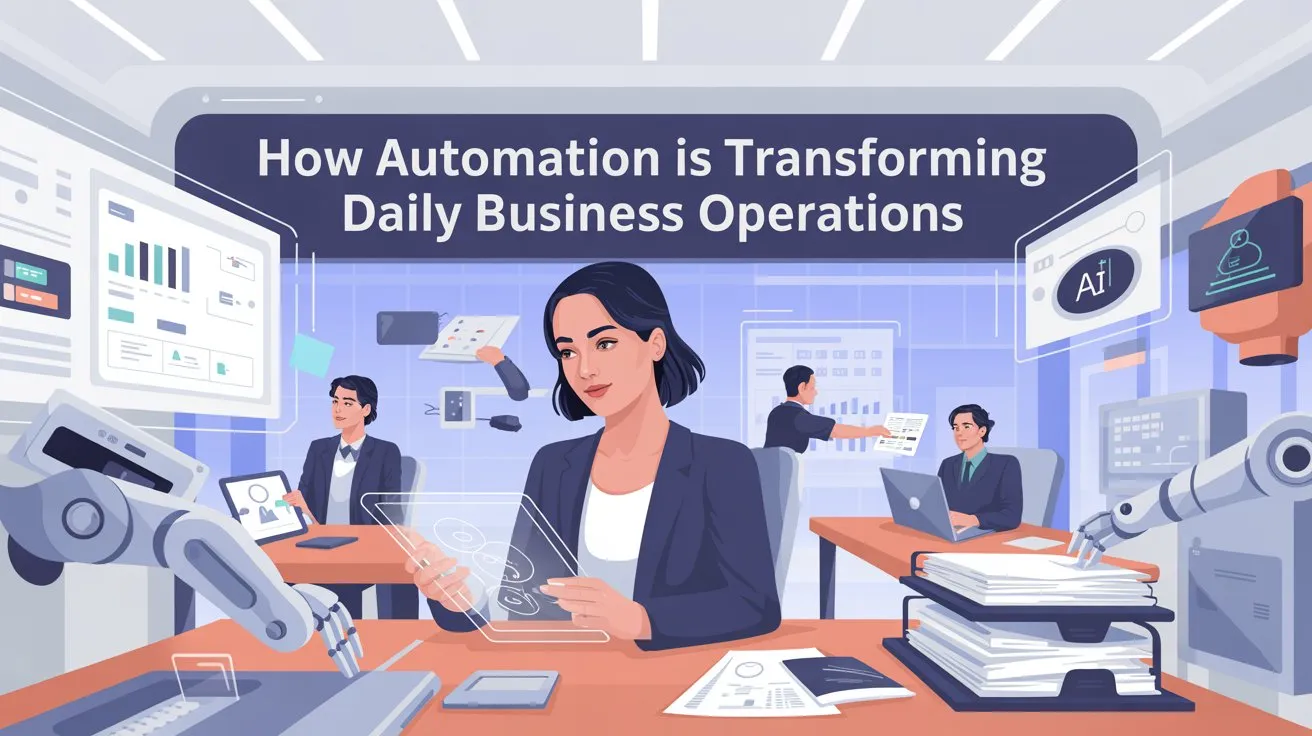
Automation is no longer limited to large enterprises or complex manufacturing systems. Today, it plays a central role in how businesses handle everyday operations. From managing data to improving communication, automation is helping companies work faster, reduce errors, and make better decisions. As digital tools become more accessible, even small and medium businesses are adopting automation to stay competitive.
Daily business operations often involve repetitive tasks such as data entry, reporting, customer communication, and process tracking. When these tasks are handled manually, they consume time and increase the chances of errors. Automation simplifies these activities by using software and systems that perform tasks consistently and efficiently. This shift is not just about saving time but also about improving overall business performance.
Business automation refers to the use of technology to perform routine tasks without constant human involvement. In daily operations, this includes activities like invoice generation, payroll processing, email responses, and workflow approvals.
Instead of relying on manual processes, businesses use automated systems to handle repetitive tasks. This ensures consistency and allows employees to focus on more strategic work. Over time, automation becomes a core part of how operations are managed.
One of the biggest advantages of automation is improved efficiency. Tasks that once took hours can now be completed in minutes. For example, generating reports or processing transactions can be done automatically with minimal input.
Automation reduces delays by ensuring that tasks are completed on time. It also eliminates the need for repeated manual work, allowing teams to focus on activities that add more value to the business. This leads to faster operations and better productivity.
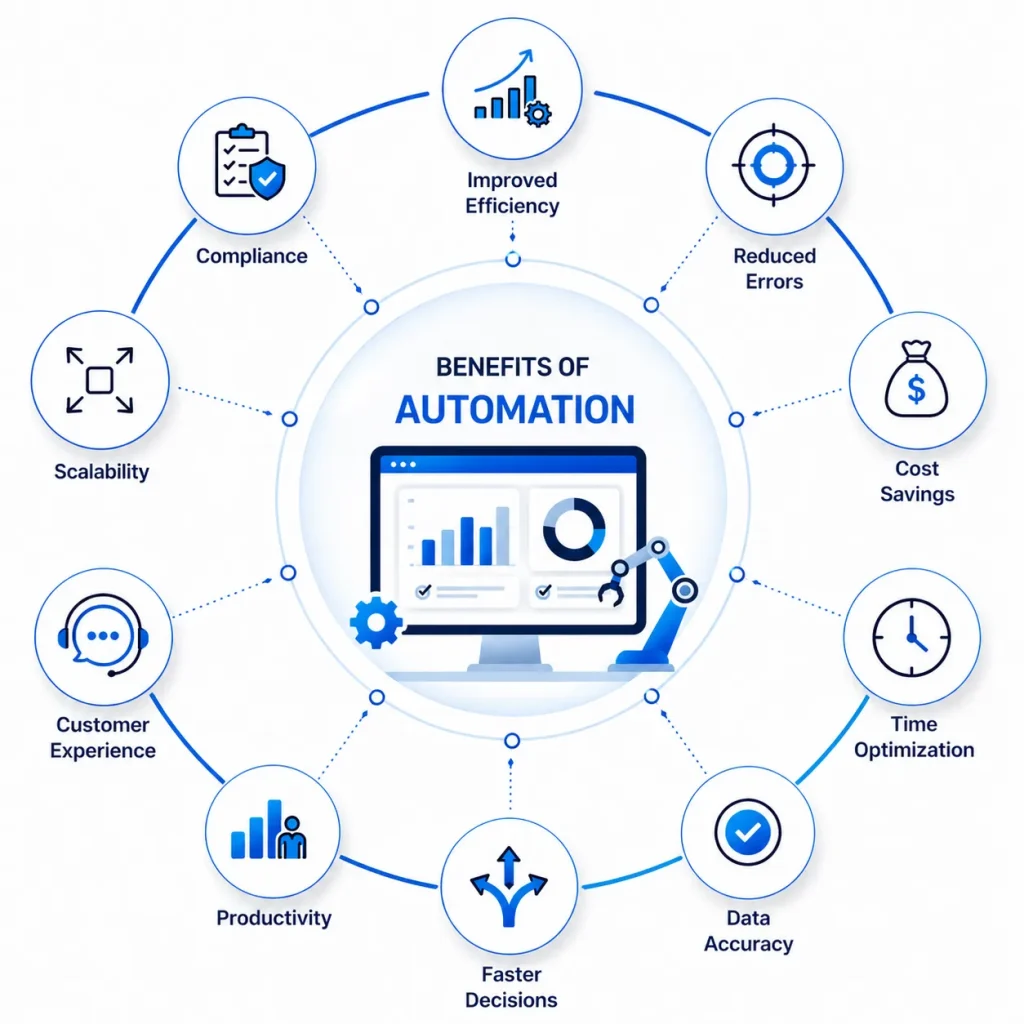
Improved Efficiency
Automation significantly speeds up routine tasks like data entry, reporting, and approvals. Processes that once required hours of manual effort can now be completed in minutes. This helps businesses operate faster and maintain consistent workflows.
Reduced Errors
Automated systems follow predefined rules and logic, which reduces the chances of human mistakes. This is especially useful in calculations, data handling, and financial processes. As a result, businesses can rely on more accurate and consistent outputs.
Cost Savings
By minimizing manual intervention, automation reduces labor costs and operational inefficiencies. Businesses can achieve more with fewer resources while maintaining quality. Over time, this leads to noticeable cost savings and better financial control.
Time Optimization
Automation frees up valuable time by handling repetitive and time consuming tasks. Teams can shift their focus toward planning, strategy, and decision making. This improves overall time management across the organization.
Better Accuracy in Data
Automation ensures that data is processed consistently without variation. It reduces duplication, missing entries, and inconsistencies in records. This leads to higher quality reporting and more reliable business insights.
Faster Decision Making
With real time data and automated reporting, businesses no longer need to wait for manual updates. Managers can access accurate information instantly and respond quickly to changes. This improves agility and decision making speed.
Improved Productivity
Employees are no longer tied to repetitive operational tasks. Automation allows them to focus on high value activities like analysis, innovation, and customer engagement. This leads to better productivity and stronger business outcomes.
Enhanced Customer Experience
Automation enables faster response times through tools like chat systems and automated emails. Customers receive timely and consistent communication. This improves satisfaction and builds stronger relationships.
Scalability
Automated systems can easily handle increased workloads as the business grows. There is no need to significantly increase manpower for managing higher volumes. This makes scaling operations more efficient and cost effective.
Stronger Compliance and Control
Automation helps maintain proper records and ensures processes follow regulatory guidelines. It reduces the risk of missing deadlines or compliance errors. Businesses gain better control over operations and reduce legal risks.
Manual processes often lead to mistakes, especially when dealing with large volumes of data. Automation helps reduce these errors by following predefined rules and processes.
Automated systems ensure that data is entered correctly, calculations are accurate, and workflows are consistent. This improves the reliability of business operations and reduces the need for rework. Accurate data also supports better decision making.
Communication is a key part of daily business operations, and automation is making it more efficient. Businesses now use automated email responses, chat systems, and customer support tools to handle queries quickly.
These systems ensure that customers receive timely responses, even outside business hours. Automation also helps track customer interactions, making it easier to provide consistent and personalized support. This improves customer experience and satisfaction.
Data is an essential part of business operations, and managing it manually can be challenging. Automation simplifies data collection, storage, and analysis.
Businesses can automatically update records, generate reports, and monitor performance through dashboards. This reduces the time spent on data management and ensures that information is always up to date. With better data handling, businesses can make more informed decisions.
Automation provides real time insights that help businesses make better decisions. Instead of relying on outdated reports, managers can access current data and analyze trends quickly.
Automated systems can highlight patterns, track performance, and identify issues early. This allows businesses to respond faster and plan more effectively. Better decision making leads to improved outcomes and long term growth.
Automation is not replacing employees, but it is changing how they work. Routine and repetitive tasks are increasingly handled by systems, allowing employees to focus on higher value activities such as analysis, planning, and customer engagement.
This shift improves job efficiency and helps teams contribute more strategically. Employees are now required to adapt by learning new tools and developing skills that align with automated environments. As a result, businesses benefit from a more skilled and productive workforce.
While automation offers many benefits, businesses may face challenges during implementation. One common issue is integrating automation tools with existing systems. Without proper planning, this can lead to disruptions in operations.
Another challenge is the need for training. Employees must understand how to use automated systems effectively. Additionally, businesses must ensure data security and maintain control over automated processes. Addressing these challenges is essential for successful adoption.
Automation is not limited to large organizations. Small and medium businesses can also benefit significantly from adopting automated processes. In fact, automation helps smaller businesses compete by improving efficiency and reducing operational costs.
Many automation tools are now affordable and easy to implement. Businesses can start with simple processes such as invoicing, payroll, or email communication. Gradual adoption allows them to scale automation based on their needs and resources.
Automation is expected to play an even bigger role in the future of business operations. As technology continues to evolve, businesses will rely more on intelligent systems to manage complex tasks.
Future automation will not only handle routine processes but also provide predictive insights and advanced analytics. This will help businesses plan better and respond quickly to changes. Organizations that adopt automation early will be better prepared for future challenges and opportunities.
Automation is transforming daily business operations by making processes faster, more accurate, and more efficient. From data management to customer support, automated systems are helping businesses reduce manual effort and improve overall performance. While there are challenges in adopting automation, the long term benefits make it a valuable investment for businesses of all sizes.
As operations become more complex, automation provides the structure and consistency needed to manage them effectively. Businesses that embrace automation can improve productivity, enhance decision making, and stay competitive in a rapidly changing environment.
What is automation in business operations
Automation in business operations refers to the use of technology to perform routine tasks such as data entry, reporting, and communication without manual effort.
How does automation improve business efficiency
Automation reduces the time required for repetitive tasks, minimizes delays, and allows employees to focus on more important activities, leading to higher productivity.
Can automation reduce operational errors
Yes, automation reduces errors by following predefined processes and ensuring consistent execution of tasks.
Is automation expensive for small businesses
Many automation tools are affordable and scalable, making them suitable for small and medium businesses as well.
Does automation replace human jobs
Automation changes job roles rather than replacing them. It allows employees to focus on strategic and creative tasks instead of routine work.
What are the risks of automation in business
Risks include system integration challenges, data security concerns, and the need for proper training to use automated tools effectively.
How can businesses start using automation
Businesses can begin by identifying repetitive tasks and implementing automation tools for processes like invoicing, payroll, and communication.
What is the future of automation in business operations
The future of automation includes advanced analytics, real time insights, and intelligent systems that support better decision making and operational efficiency.
Subscribe to our newsletter and stay updated.