- Follow On:
- [email protected]
- +918655715397
- Thane west, Maharashtra - 400604
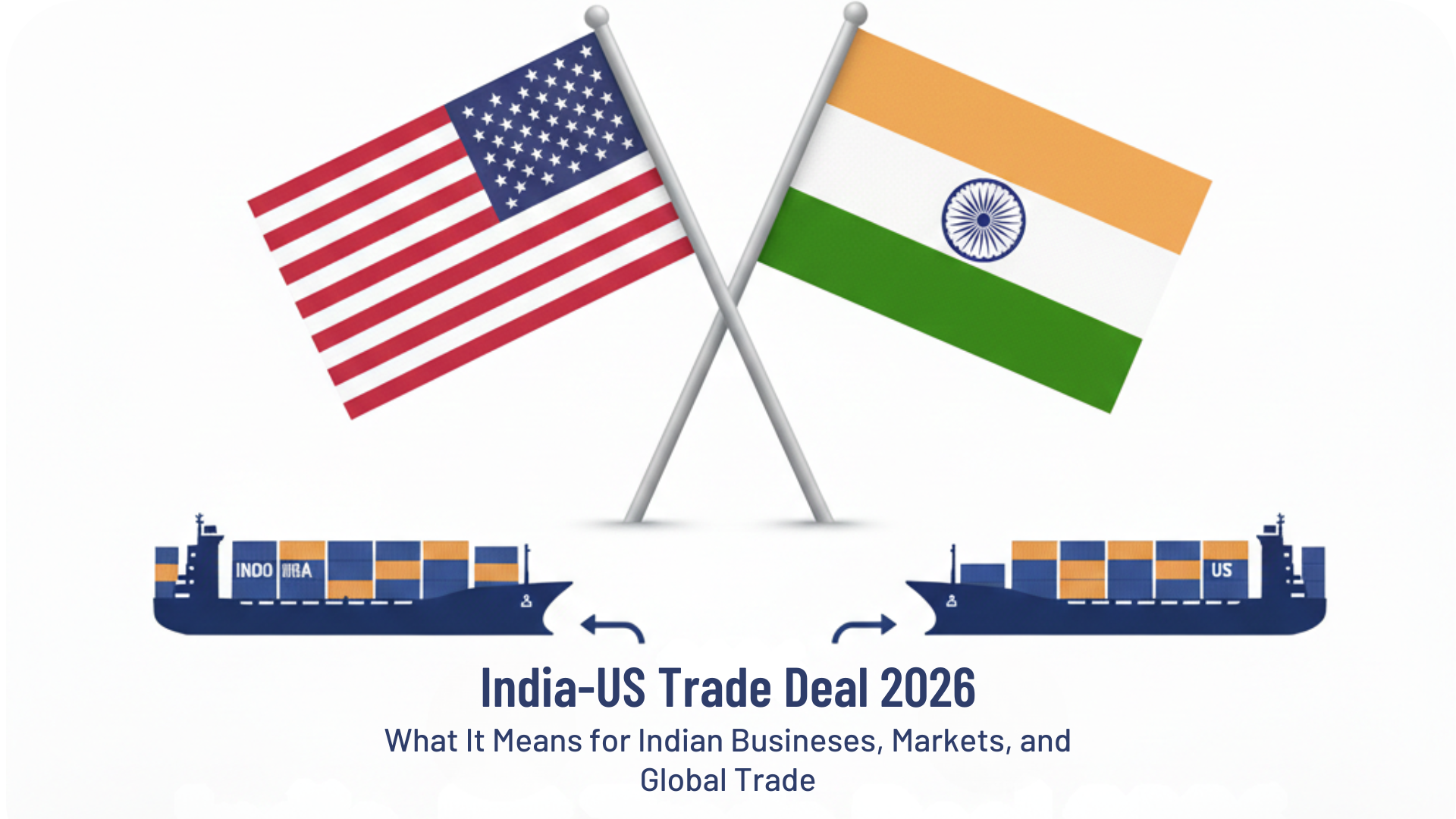
India and the United States are moving closer to finalising a comprehensive trade agreement in 2026, aimed at strengthening bilateral economic ties, easing trade barriers, and improving market access for key sectors. Currently, average tariffs on Indian exports to the US range between 2% and 10%, depending on the product category, while US exports to India often face higher duties, typically between 7% and 15%, especially in agriculture, electronics, and industrial goods.
These tariff gaps have long been a point of negotiation between the two countries. The proposed India–US Trade Deal seeks to rationalise duties, reduce non-tariff barriers, and improve predictability in cross-border trade, making it easier for businesses to plan exports, pricing, and long-term investments.
As India’s largest trading partner, the US plays a critical role in India’s export growth, energy security, and investment inflows. This agreement is expected to influence exports, compliance frameworks, MSMEs, energy imports, and global competitiveness, making it a significant development for Indian businesses and policymakers alike.
The India–US trade relationship has expanded rapidly over the last decade, with bilateral trade crossing record levels. The 2026 trade deal seeks to:
Reduce tariff and non-tariff barriers
Improve supply chain resilience
Strengthen technology and defence cooperation
Address energy security and geopolitical trade risks
Unlike earlier limited trade arrangements, this deal is positioned as a strategic economic partnership, not just a tariff-focused agreement.
Both countries are working toward lowering duties on selected goods and improving ease of entry for exporters. This could help Indian companies compete more effectively in the US market, especially in manufacturing and services.
India’s energy imports, including Russian oil purchases, have been a sensitive global issue. The trade talks aim to balance:
India’s energy security needs
US concerns over geopolitical risks
Diversification of crude oil and LNG sourcing
This could lead to greater US energy exports to India over time.
The deal is expected to deepen collaboration in:
Semiconductors
Defence manufacturing
Critical technologies
Advanced engineering
This aligns with India’s Make in India and Atmanirbhar Bharat initiatives.
Improved access to the US market
Better cost competitiveness
Growth in auto, machinery, and industrial components
Stronger presence for Indian generics
Increased exports of medical devices
Higher trust in Indian pharma standards
Expansion of cross-border digital services
Improved mobility for skilled professionals
Growth in cloud, AI, and fintech services
Increased LNG and energy trade opportunities
Reduced supply risks
Greater stability in input costs
Easier access to US buyers
Improved integration into global value chains
Higher demand for compliance-ready exporters
Better access to global markets
Reduced trade friction
Stronger investor confidence
Increased export diversification
Improved long-term trade predictability
While opportunities expand, businesses should prepare for:
Stricter documentation and traceability norms
ESG and sustainability compliance
Enhanced customs and trade reporting
Regulatory alignment with US standards
This makes finance, tax, payroll, and compliance readiness more important than ever.
Export-oriented manufacturers
MSMEs in engineering, pharma, and textiles
IT and digital service providers
Energy-intensive industries
Companies with strong compliance frameworks
Reviewing export pricing and cost structures
Strengthening statutory and trade compliance
Upgrading financial reporting systems
Planning for currency and tax implications
Aligning HR and payroll processes for cross-border growth
The India–US Trade Deal 2026 signals a shift toward deeper economic integration and global competitiveness. For Indian businesses, success will depend not only on market access but also on operational readiness, compliance strength, and financial discipline.
At Wisecor, we help businesses navigate:
Trade-linked compliance requirements
Financial and accounting readiness
Payroll and statutory alignment
Cross-border operational structuring
As the agreement evolves, timely preparation will be key to capturing long-term value.
Subscribe to our newsletter and stay updated.