- Follow On:
- [email protected]
- +918655715397
- Thane west, Maharashtra - 400604
As businesses expand across multiple states in India, managing employees becomes more complex than simply processing monthly salaries. Each state may have different labor regulations, Professional Tax rules, minimum wage rates, leave policies, and statutory requirements. Without a structured Payroll Compliance Checklist, businesses can face penalties, delayed filings, payroll errors, and compliance risks that impact both operations and employee trust.
Effective Payroll Management is no longer limited to salary calculations. It involves Payroll Processing, statutory deductions, tax compliance, attendance tracking, leave management, employee documentation, and timely government filings. For organizations operating in multiple locations, maintaining consistent HR compliance while meeting state-specific regulations is one of the biggest operational challenges.
According to industry reports, businesses with standardized payroll and compliance processes experience fewer payroll disputes, improved employee satisfaction, and stronger regulatory compliance. Many growing organizations now rely on Payroll Outsourcing and automated Payroll Software to simplify payroll administration while ensuring accuracy across multiple states.
This guide explains what payroll compliance is, why it matters for businesses operating across India, what a multi-state payroll compliance checklist should include, and how companies can simplify compliance as they grow.
Payroll compliance refers to the process of ensuring that employee salaries, statutory deductions, tax payments, and labor law obligations are managed according to central and state government regulations.
A well-managed payroll system ensures employees receive accurate salaries on time while businesses fulfill their legal responsibilities.
An effective Payroll Compliance Checklist generally covers:
Maintaining accurate payroll records not only ensures legal compliance but also builds employee confidence and supports smooth business operations.
Businesses operating across multiple states must comply with both central labor laws and state-specific employment regulations. Differences in Professional Tax, minimum wages, labor welfare requirements, and local compliance rules make payroll administration significantly more challenging than managing employees within a single state.
Without proper Compliance Management, businesses may experience:
A structured payroll compliance guide for Indian businesses helps organizations standardize payroll operations while ensuring every employee receives accurate compensation regardless of their work location.
For growing businesses, payroll compliance also supports stronger Workforce Management, improves financial planning, and reduces operational disruptions.
A comprehensive multi-state payroll compliance checklist should cover every activity involved in monthly payroll administration, from attendance tracking to statutory reporting.
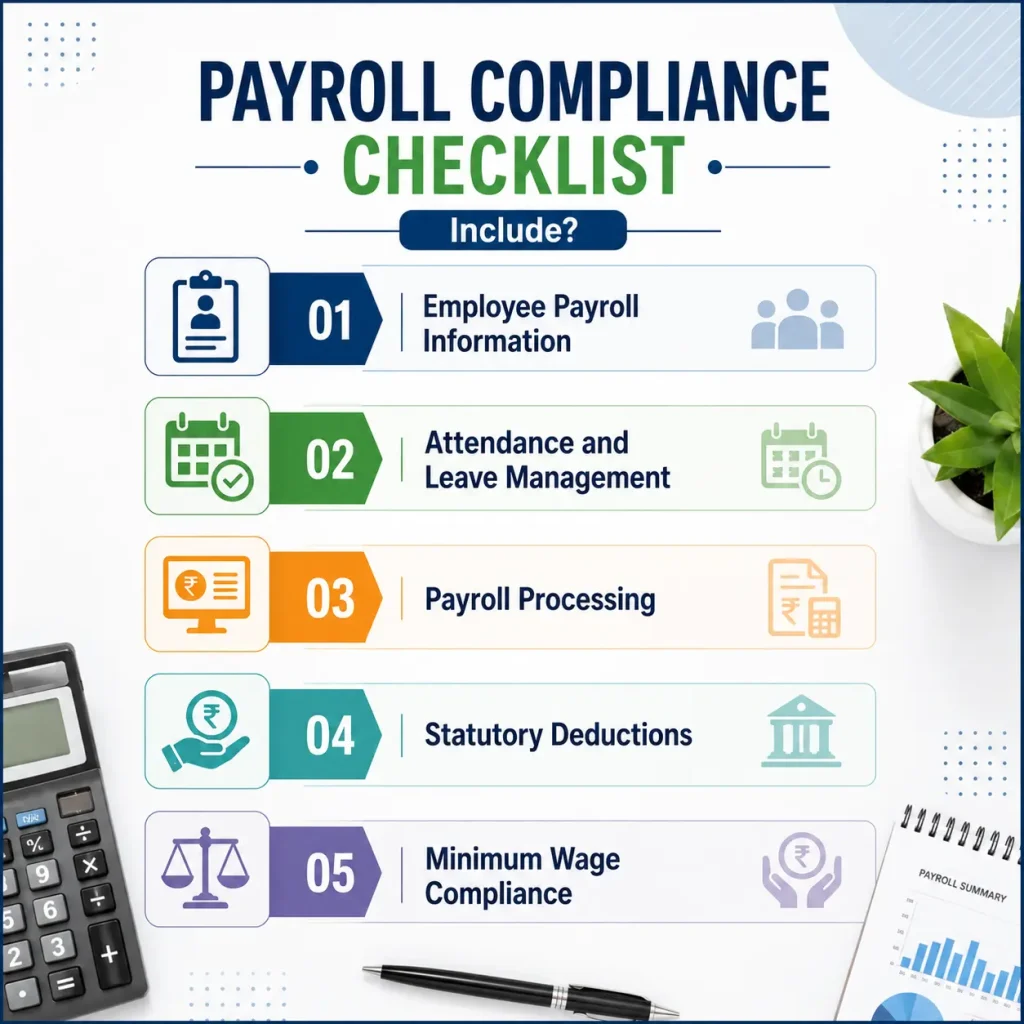
Every payroll cycle begins with accurate employee records. Businesses should regularly review employee details, salary structures, tax declarations, bank information, and employment documentation to avoid processing errors.
Attendance and Leave Management
Accurate Attendance Management and Leave Management directly impact payroll calculations. Businesses should verify attendance records, approved leave, overtime, holidays, and shift details before salary processing begins.
Consistent attendance tracking improves payroll accuracy while minimizing employee disputes.
Payroll Processing
Monthly Payroll Processing should include salary calculations, allowances, reimbursements, bonuses, overtime payments, deductions, and net salary verification.
Before releasing salaries, payroll teams should confirm:
Implementing standardized payroll review procedures helps reduce calculation errors.
Statutory Deductions
One of the most critical payroll responsibilities is calculating and depositing statutory deductions accurately.
Businesses should verify:
Missing statutory deadlines may result in interest charges, penalties, or regulatory notices.
Minimum Wage Compliance
Minimum wage rates vary across states, industries, and employee categories. Employers operating in multiple states should regularly monitor wage revisions issued by state governments.
Reviewing salary structures periodically helps ensure continuous compliance while reducing legal risks.
Managing payroll across several states requires more than maintaining separate salary sheets. Businesses need standardized processes supported by technology, documented workflows, and regular compliance monitoring.
Some effective practices include:
These practices simplify Payroll Management while improving operational consistency across different business locations.
As organizations expand into new states, payroll complexity naturally increases. Establishing structured payroll procedures early helps businesses avoid compliance challenges in the future.
Some recommended best practices include:
Following these practices helps businesses improve payroll accuracy, strengthen HR compliance, and reduce administrative workload.
Many organizations choose Payroll Outsourcing because managing payroll internally becomes increasingly difficult as operations expand across multiple states.
An experienced payroll partner helps businesses streamline:
Instead of spending significant time managing payroll internally, business leaders can focus on strategic growth while experienced professionals handle complex compliance responsibilities.
Managing payroll across multiple states doesn’t have to be overwhelming. The key is to create standardized payroll processes while keeping track of state-specific regulations. Businesses that invest in proper systems, automation, and regular compliance reviews are better equipped to handle payroll efficiently as they grow.
Some practical ways to simplify Payroll Compliance include:
Following these practices reduces manual errors and helps businesses maintain consistent payroll operations across every branch or office.
Many businesses begin managing payroll internally, but as operations expand across multiple states, payroll administration becomes more time-consuming and complex.
Companies should consider Payroll Outsourcing when they experience:
Working with an experienced Payroll Outsourcing partner provides businesses with access to payroll specialists, automated systems, and updated compliance knowledge while allowing management to focus on core business growth.
Even well-managed organizations can make payroll errors if proper controls are not in place. Identifying common mistakes helps businesses strengthen their compliance processes.
Outdated employee information, incorrect salary structures, or missing tax declarations can lead to payroll calculation errors and compliance issues.
Late deposits of TDS on Salary, Professional Tax, PF, or ESI contributions may result in penalties, interest charges, and legal notices.
Errors in attendance, overtime, incentives, bonuses, or statutory deductions affect employee payroll accuracy and reduce employee trust.
Businesses operating across multiple states often overlook differences in minimum wages, labor welfare requirements, or Professional Tax regulations.
Processing payroll without regular verification increases the risk of compliance errors and financial discrepancies.
A structured Payroll Compliance Checklist combined with periodic payroll audits helps businesses identify and correct issues before they become serious problems.
Modern Payroll Software plays a significant role in improving payroll accuracy and reducing manual effort. Instead of relying on spreadsheets or manual calculations, businesses can automate repetitive payroll activities while maintaining better compliance.
Some of the key advantages include:
While software improves efficiency, businesses should still conduct periodic compliance reviews to ensure payroll remains accurate and aligned with regulatory requirements.
A manufacturing company expanded operations into Maharashtra, Gujarat, Karnataka, and Tamil Nadu within three years. Initially, payroll was managed independently at each location, resulting in inconsistent salary processing, delayed statutory filings, and difficulties managing state-specific compliance requirements.
The company implemented a centralized Payroll Management system supported by Payroll Software and partnered with a professional payroll outsourcing provider. Standardized payroll workflows, automated compliance tracking, and monthly payroll audits significantly improved payroll accuracy, reduced administrative workload, and ensured timely statutory filings across all locations.
A payroll compliance checklist is a structured list of payroll activities that helps businesses ensure salary processing, statutory deductions, tax payments, and regulatory filings are completed accurately and on time.
Different Indian states have varying regulations related to Professional Tax, minimum wages, labor welfare, and other statutory requirements, making payroll administration more complex.
Businesses should review payroll compliance every month before salary processing and conduct periodic internal audits to identify and correct compliance issues.
Organizations should maintain employee records, attendance data, salary structures, tax declarations, payroll reports, statutory payment records, and compliance documentation for audit and regulatory purposes.
Payroll software automates calculations and reporting, but businesses should still review payroll data regularly and monitor changes in labor laws to maintain full compliance.
Yes. Payroll outsourcing provides growing businesses with access to payroll experts, automated systems, and compliance support without the need to build a large internal payroll team.
Payroll non-compliance can lead to financial penalties, interest charges, employee disputes, regulatory notices, legal action, and reputational damage.
Look for a provider with expertise in multi-state payroll regulations, strong compliance capabilities, secure payroll technology, transparent reporting, and scalable payroll management services.
Managing payroll across multiple states requires more than processing monthly salaries. Businesses must ensure compliance with central and state-specific regulations, accurately calculate statutory deductions, maintain employee records, and meet every filing deadline. A well-structured Payroll Compliance Checklist helps organizations stay organized, reduce payroll errors, and strengthen HR compliance.
As companies expand, investing in reliable Payroll Management, modern Payroll Software, and professional Payroll Outsourcing services can simplify complex payroll operations while improving efficiency and reducing compliance risks. By implementing standardized payroll processes and conducting regular compliance reviews, businesses can build a scalable payroll system that supports long-term growth across multiple locations.
Subscribe to our newsletter and stay updated.