• Wisecor
  • 19 May 26

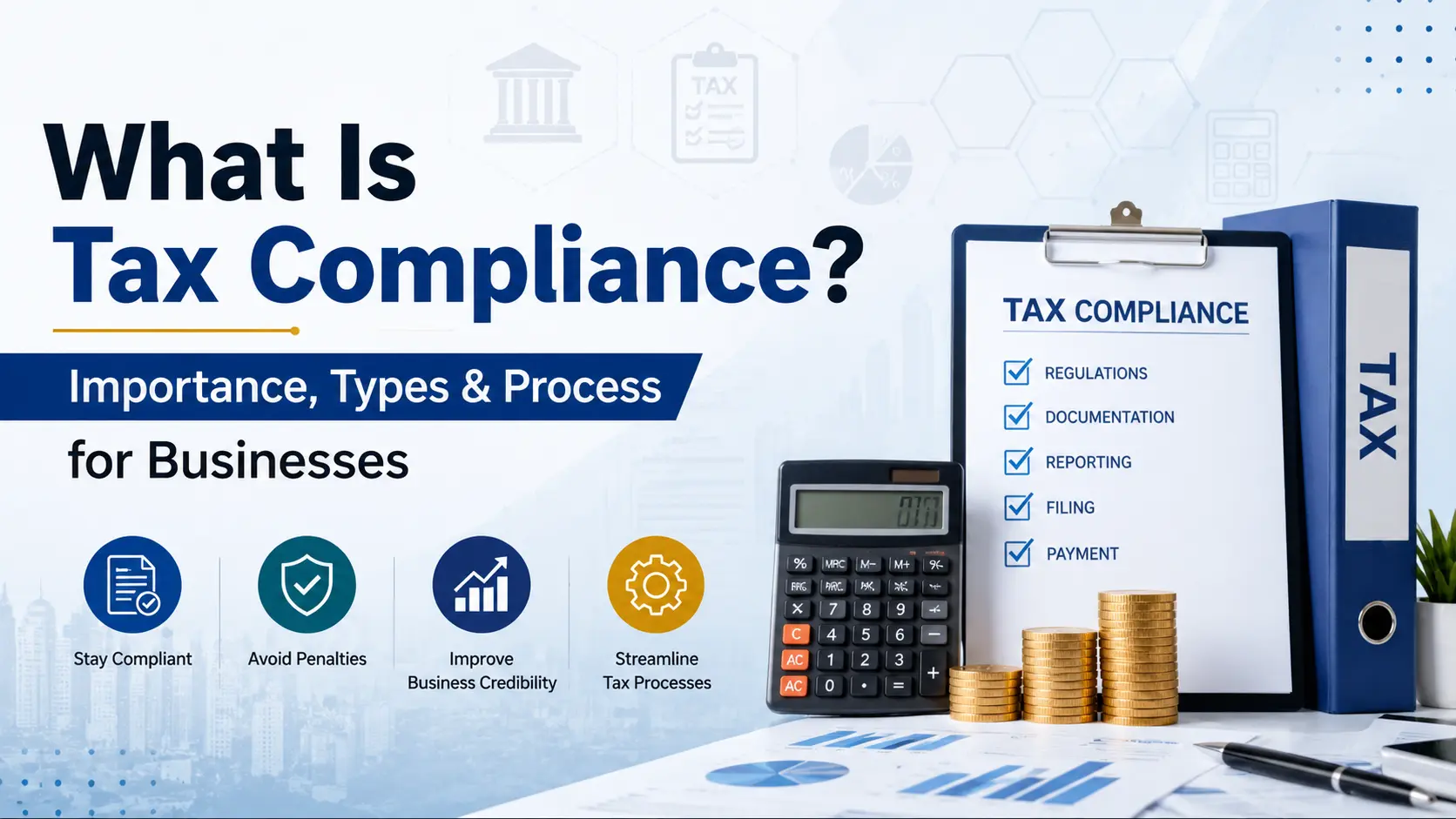
What Is Tax Compliance? Importance, Types & Process for Businesses

In today’s rapidly changing business environment, tax regulations and financial reporting requirements are becoming more complex than ever. From GST filing and payroll taxes to corporate taxation and compliance reporting, businesses must ensure they follow all government tax regulations accurately and on time. This is where tax compliance becomes extremely important.

Many organizations today are investing in tax compliance services for businesses to reduce financial risks, avoid penalties, and maintain smooth business operations. Whether it is a startup, SME, or multinational company, maintaining proper tax compliance helps businesses build financial credibility and long-term operational stability.

According to industry reports, businesses that implement proper tax compliance processes can significantly reduce legal risks, improve financial transparency, and enhance operational efficiency. With increasing digital tax systems and automated reporting requirements, companies are now adopting digital tax compliance solutions to streamline taxation processes.

In this guide, we will understand what tax compliance is, why it is important for businesses, its different types, compliance processes, and real-world examples.

What Is Tax Compliance?

Tax compliance refers to the process of following all government tax laws, regulations, filing requirements, and payment obligations applicable to a business or individual.

It includes activities such as:

  • Filing tax returns on time
  • Paying taxes accurately
  • Maintaining financial records
  • Reporting income correctly
  • Following GST and payroll tax regulations
  • Managing corporate tax documentation

Businesses that fail to comply with tax regulations may face:

  • Heavy penalties
  • Legal notices
  • Audit risks
  • Financial losses
  • Reputation damage

This is why many organizations now rely on business tax compliance services to manage taxation processes efficiently.

Why Is Tax Compliance Important for Businesses?

Tax compliance is not only about avoiding penalties. It also helps businesses improve operational transparency, financial planning, and long-term growth.

How Does Tax Compliance Help Avoid Legal Penalties and Fines?

One of the biggest reasons businesses prioritize tax compliance is to avoid government penalties and legal complications.

Late filings, incorrect tax calculations, or missing documentation can lead to:

  • Financial penalties
  • Interest charges
  • Regulatory notices
  • Tax audits

Using corporate tax compliance services helps businesses reduce these risks significantly.

How Does Tax Compliance Improve Business Credibility?

Companies with strong tax compliance records build greater trust among:

  • Investors
  • Financial institutions
  • Clients
  • Government authorities

Proper tax management reflects financial discipline and operational reliability.

How Does Tax Compliance Support Better Financial Planning?

Accurate tax reporting helps businesses:

  • Track financial performance
  • Improve budgeting
  • Manage cash flow efficiently
  • Plan future investments

This becomes especially important for growing companies managing multiple revenue streams.

How Does Tax Compliance Reduce Audit Risks?

Tax authorities increasingly use digital systems to identify compliance issues. Businesses with inaccurate reporting face a higher risk of audits and investigations.

Professional tax compliance solutions help organizations maintain accurate financial records and reduce audit exposure.

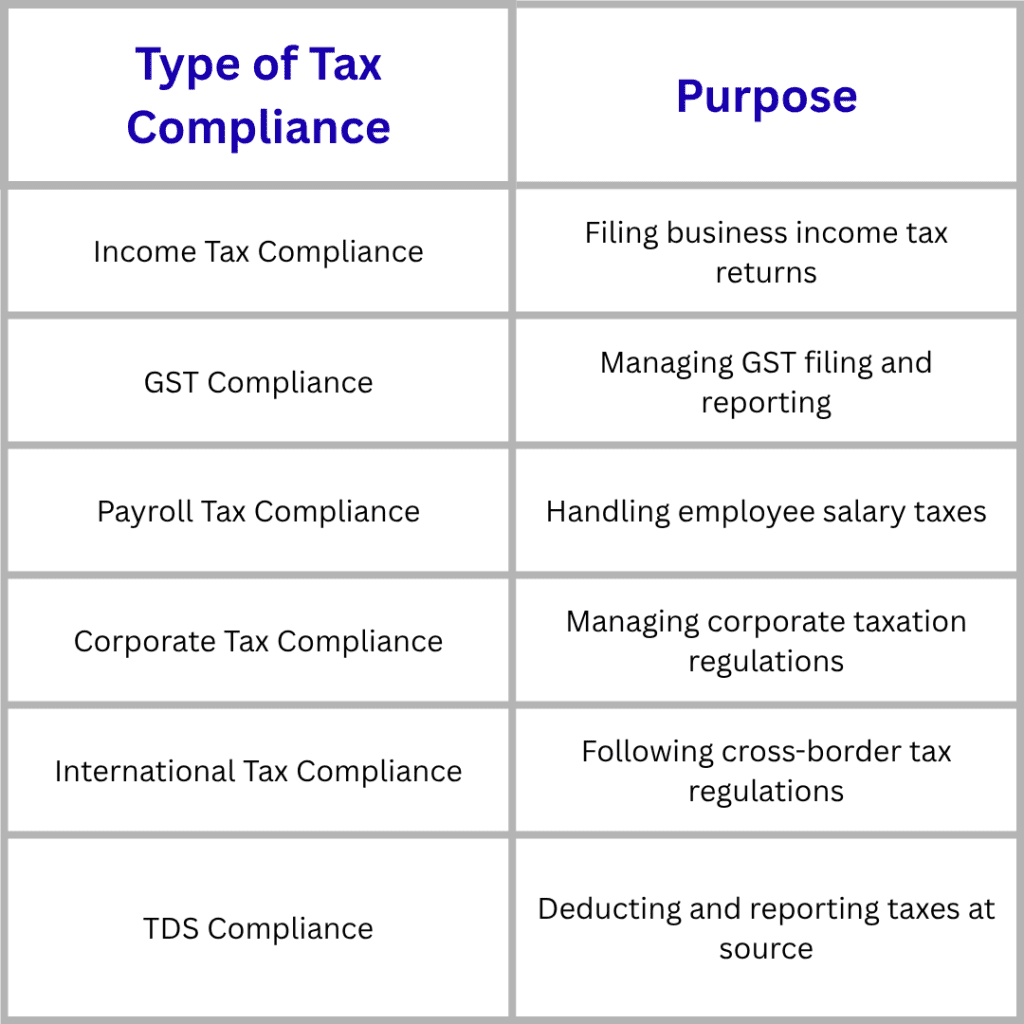
What Are the Different Types of Tax Compliance for Businesses?

Different businesses have different taxation responsibilities depending on their industry, location, and operational structure.

 types-of-tax-and-compliance

These tax categories form the foundation of modern business taxation systems.

Why Is GST Compliance Important for Businesses?

GST compliance has become one of the most critical responsibilities for Indian businesses.

It includes:

  • GST registration
  • Invoice management
  • GST return filing
  • Tax payment tracking
  • E-invoicing compliance

Businesses often invest in GST compliance services to ensure accurate reporting and avoid penalties.

What Are the Common GST Compliance Challenges?

  • Incorrect invoice filing
  • Delayed GST returns
  • Mismatch in tax records
  • E-invoicing errors

Automated GST systems are helping businesses reduce manual compliance errors significantly.

What Is Payroll Tax Compliance?

Managing employee taxes is another important area of business taxation.

Payroll tax compliance includes:

  • Salary tax deductions
  • Employee tax filings
  • Provident fund contributions
  • Professional tax payments
  • Payroll documentation

Many companies now adopt payroll tax compliance solutions to automate salary processing and improve tax accuracy.

Real Business Problem:

A growing company managing hundreds of employees manually may face payroll errors and delayed tax filings. Outsourcing payroll compliance can improve efficiency and reduce operational risks.

What Is the Tax Compliance Process for Businesses?

A proper tax compliance process helps businesses maintain accurate reporting and avoid legal complications.

Step 1: How Should Businesses Manage Financial Records?

Businesses must maintain accurate records of:

  • Income
  • Expenses
  • Invoices
  • Payroll transactions
  • Tax payments

Step 2: How Is Tax Calculation Done?

Organizations calculate applicable taxes based on business activities and government regulations.

Step 3: How Do Businesses Handle Tax Filing and Reporting?

Businesses submit tax returns and compliance documents within regulatory deadlines.

Step 4: Why Is Timely Tax Payment Important?

Applicable taxes must be paid accurately and on time to avoid penalties.

Step 5: Why Are Compliance Reviews and Audit Preparation Necessary?

Regular internal reviews help businesses identify reporting errors before audits occur.

Many companies now use digital tax compliance software to simplify these processes and improve reporting accuracy.

What Are Some Real-World Examples of Tax Compliance?

Understanding real-world tax compliance examples helps businesses identify how compliance impacts daily operations.

Example 1: What Does GST Compliance Look Like?

A retail company files monthly GST returns and maintains invoice records to comply with taxation regulations.

Example 2: How Does Payroll Tax Compliance Work?

An IT company deducts employee taxes from salaries and submits payroll tax reports on time.

Example 3: What Is International Tax Compliance?

A multinational company follows cross-border taxation rules for international transactions and foreign employees.

These examples show how tax compliance affects businesses across industries and operational structures.

Common Tax Compliance Challenges Businesses Face

Despite understanding tax regulations, many businesses still struggle with maintaining proper compliance due to changing laws and operational complexities.

Major Tax Compliance Challenges

1. Frequent Regulatory Changes

Tax laws and GST regulations continue to evolve, making compliance management difficult for businesses.

2. Manual Reporting Errors

Incorrect calculations, missing invoices, and data entry mistakes can lead to penalties and audit risks.

3. Delayed Tax Filings

Late filings often result in financial penalties, interest charges, and compliance notices.

4. Multi-Location Tax Complexity

Businesses operating across different states or countries face additional tax reporting challenges.

5. Lack of Compliance Expertise

Small businesses often lack dedicated tax professionals to manage complex taxation requirements.

This is why many organizations now use outsourced tax compliance services to improve operational efficiency and reduce risks.

How Digital Tax Compliance Solutions Are Transforming Businesses

Modern businesses are increasingly adopting digital tax systems to automate compliance processes and improve reporting accuracy.

Benefits of Digital Tax Compliance Solutions

  • Automated tax calculations
  • Faster GST return filing
  • Real-time invoice tracking
  • Reduced manual errors
  • Better audit preparation
  • Improved compliance reporting

Cloud-based compliance platforms are helping businesses save time while maintaining accurate taxation records.

Use Case Example

A growing e-commerce company using automated GST software can track invoices, file returns faster, and reduce reporting errors significantly compared to manual processes.

Signs Your Business Needs Professional Tax Compliance Services

Many businesses delay compliance management until operational problems begin affecting financial performance.

Here are common signs businesses need tax compliance support:

1. Frequent Tax Filing Errors

Repeated reporting mistakes may increase audit risks and government penalties.

2. Delayed GST or Payroll Filings

Missing compliance deadlines can negatively impact business operations and financial credibility.

3. Difficulty Managing Multi-State Taxes

Businesses operating across multiple locations often struggle with varying tax regulations.

4. Increasing Compliance Workload

Growing businesses usually face higher documentation and reporting responsibilities.

5. Lack of Internal Tax Expertise

Professional tax consultants help businesses manage changing regulations more efficiently.

If these issues are affecting operations, investing in business tax compliance services can improve financial management and reduce compliance risks.

Frequently Asked Questions (FAQs)

1. What is tax compliance in business?

Tax compliance refers to following government tax laws, filing returns correctly, maintaining records, and paying taxes on time.

2. Why is tax compliance important for businesses?

Proper tax compliance helps businesses avoid penalties, improve financial transparency, reduce audit risks, and maintain legal operations.

3. What are the major types of tax compliance?

Major types include income tax compliance, GST compliance, payroll tax compliance, TDS compliance, and corporate tax compliance.

4. What happens if a business fails to comply with tax regulations?

Non-compliance can result in penalties, legal notices, audits, financial losses, and reputational damage.

5. How do tax compliance services help businesses?

Tax compliance services help businesses manage filings, maintain accurate records, reduce errors, and stay updated with changing regulations.

  1. What is GST compliance?

GST compliance involves GST registration, return filing, invoice management, e-invoicing, and tax payment reporting.

  1. Why are businesses adopting digital tax compliance solutions?

Digital tax systems improve reporting accuracy, automate calculations, reduce manual errors, and simplify compliance management.

  1. Which businesses need tax compliance services the most?

Startups, SMEs, multinational companies, e-commerce businesses, and organizations operating across multiple locations benefit significantly from professional tax compliance support.

Conclusion

Tax compliance has become an essential part of modern business operations. From GST filing and payroll taxes to corporate taxation and international compliance, businesses must maintain accurate financial reporting to avoid risks and ensure operational stability.

Companies that invest in proper tax compliance processes benefit from:

  • Better financial transparency
  • Reduced legal risks
  • Improved operational efficiency
  • Stronger business credibility

As tax regulations continue evolving in 2026, many organizations are adopting digital tax compliance solutions and outsourced tax compliance services to streamline reporting processes and improve compliance accuracy. Businesses that prioritize proactive tax management today will be better prepared for sustainable growth and long-term financial success.


Sign Up to Get Latest Updates

Subscribe to our newsletter and stay updated.