- Follow On:
- [email protected]
- +918655715397
- Thane west, Maharashtra - 400604
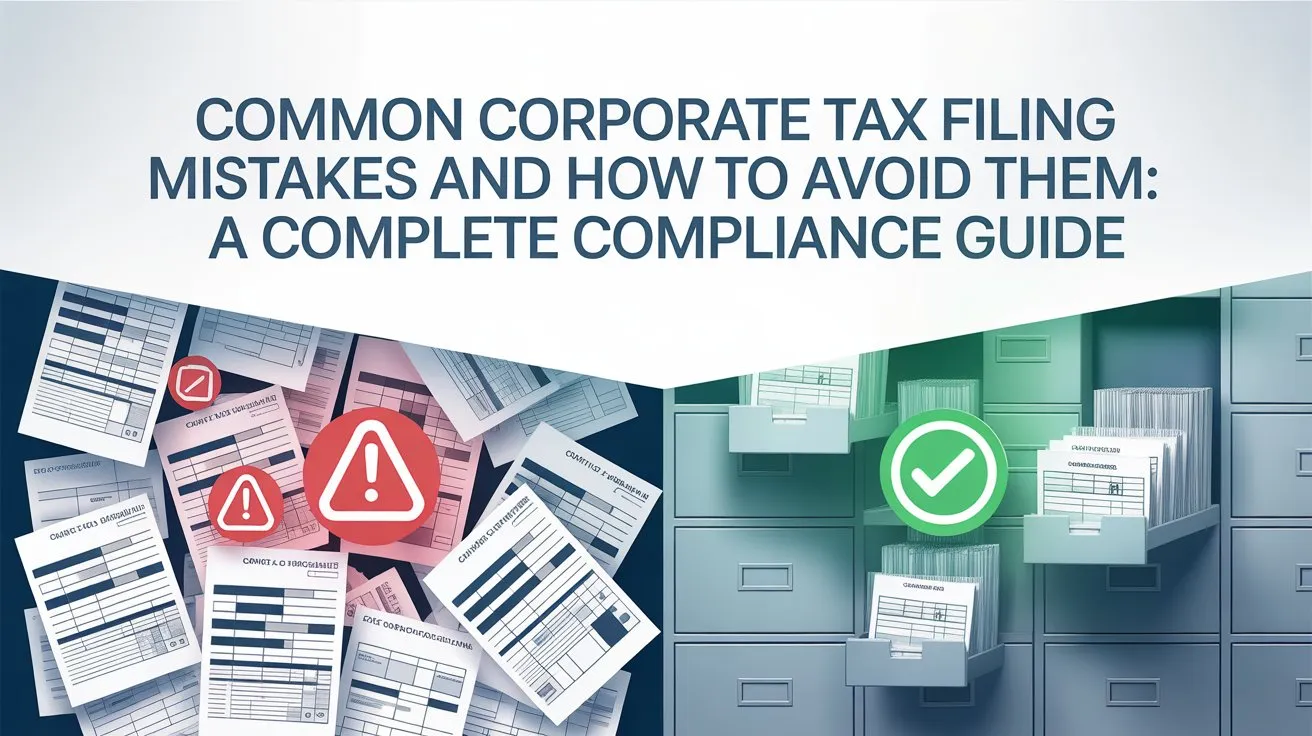
Corporate tax filing is not simply an annual administrative task. It reflects how accurately a company understands its financial position, regulatory compliance obligations, and tax liability. Even well managed businesses can make errors when preparing a corporate income tax return, especially when internal controls are weak or documentation is incomplete. These common corporate tax filing mistakes often lead to tax penalty and interest charges, increased tax audit risk, and long term financial reporting discrepancies.
Many business tax filing mistakes occur not because of intentional wrongdoing but due to misunderstanding of business tax compliance requirements or gaps in internal review. Incorrect tax reporting, tax documentation errors, and tax liability miscalculation can quietly accumulate until they become serious compliance concerns. Understanding how corporate tax filing works and where companies typically go wrong is essential for reducing corporate tax compliance mistakes and strengthening overall financial governance.
When discussing what are the most common corporate tax filing mistakes, patterns quickly emerge across industries. Certain errors repeatedly appear in corporate income tax return reviews, especially in growing organizations where compliance processes may not be fully structured.
Common corporate tax filing mistakes include:
These corporate tax compliance mistakes often overlap. For example, poor tax record keeping requirements can lead to incorrect tax reporting, which then increases tax audit risk. Financial reporting discrepancies between accounting records and tax filings are another frequent issue that draws regulatory scrutiny.
Mistakes businesses make in tax reporting are not limited to small companies. Tax filing mistakes small and mid sized companies make may differ in scale, but large corporations also face corporate tax filing errors when processes are not standardized. Without proper review, even minor errors can escalate into significant compliance challenges.
Why corporate tax compliance is important becomes evident when examining the consequences of incorrect corporate tax return filing. Beyond immediate tax penalty and interest charges, non compliance can damage credibility with investors, lenders, and regulators. Corporate tax compliance is closely tied to financial integrity.
When statutory tax filing deadlines are missed, late tax filing penalties accumulate quickly. In some cases, repeated delays trigger deeper scrutiny from tax authorities, increasing tax audit risk. Incorrect tax reporting may also result in reassessments, which can disrupt cash flow planning and create unexpected liabilities.
Corporate tax compliance mistakes affect more than finances. They can influence corporate governance evaluations and raise concerns about internal controls. The role of internal controls in tax compliance becomes critical in preventing tax return errors before submission. Strong review mechanisms reduce financial reporting discrepancies and support reliable tax provision calculations.
The importance of accurate financial reporting in tax filing also extends to long term strategy. If management decisions rely on distorted profit figures due to tax liability miscalculation, resource
allocation and investment planning may suffer. This is why best practices for corporate tax compliance are not just regulatory requirements but foundational elements of sustainable business operations
Preparing a corporate income tax return should never be left to the final weeks before the statutory tax filing deadline. Most corporate tax filing errors develop gradually during the financial year, not at the time of submission. Businesses that treat compliance as an ongoing process rather than a year end obligation are far less likely to face tax penalty and interest charges.
A structured approach reduces business tax filing mistakes and supports accurate tax reporting. Preparation begins with reviewing whether accounting records align with tax record keeping requirements and whether documentation is sufficient to defend reported figures.
Understanding how to prepare for corporate tax filing starts with discipline in financial reporting. Companies must ensure that revenue recognition policies are consistent and that deductible expenses reporting is supported by valid documentation. Many corporate tax compliance mistakes arise when adjustments are made without proper review or when tax documentation errors go unnoticed.
A strong preparation process typically includes:
Companies should also examine whether there are financial reporting discrepancies between accounting profit and taxable income. These differences must be clearly documented to avoid incorrect tax reporting. The corporate tax filing checklist for companies should include internal review stages and approval workflows before submission.
The role of internal controls in tax compliance becomes especially important at this stage. Segregation of duties, supervisory review, and documented procedures reduce the risk of tax liability miscalculation. When controls are weak, even experienced finance teams can overlook common corporate tax filing mistakes.
Preventing corporate tax filing errors requires a combination of process discipline and technical understanding. Businesses often ask how to avoid corporate tax filing errors without increasing administrative burden. The answer lies in building structured compliance routines.
Best practices for corporate tax compliance include maintaining organized documentation throughout the year and performing periodic internal reviews. Waiting until year end to identify mistakes businesses make in tax reporting increases exposure to tax audit risk. Instead, quarterly reviews of taxable income calculations and deductible expenses reporting can highlight issues early.
To reduce corporate tax compliance mistakes, companies should:
Another frequent concern is how to reduce tax audit risk for businesses. Clear documentation, consistent reporting methods, and transparent adjustments significantly lower scrutiny. When tax record keeping requirements are met, authorities are less likely to question figures.
The consequences of incorrect corporate tax return filing extend beyond immediate financial cost. Tax penalty and interest charges can accumulate quickly, especially when errors remain undetected for extended periods. Penalties for late corporate tax filing are often fixed percentages of tax due, which can materially affect profitability.
Incorrect tax reporting may also trigger reassessments, additional documentation requests, or formal audits. Increased tax audit risk consumes management time and creates operational distraction. In more serious cases, repeated corporate tax compliance mistakes can lead to reputational damage.
Financial reporting discrepancies between tax filings and published financial statements can raise concerns among stakeholders. Lenders and investors may question governance standards when tax provision errors or tax liability miscalculation become public. For this reason, the importance of accurate financial reporting in tax filing is directly linked to corporate credibility.
When errors are identified after submission, businesses must understand how to correct errors in corporate tax returns. Prompt disclosure and amendment, where permitted by law, often reduces additional penalties. Delayed correction, however, may increase tax penalty and interest charges.
To strengthen corporate tax compliance, organizations should formalize a clear internal checklist. A practical corporate tax compliance checklist may include:
Using a structured checklist reduces common corporate tax filing mistakes and improves accountability within the finance function.
Corporate tax compliance is more than a legal formality. It reflects the quality of financial reporting, the strength of internal controls, and the discipline of management processes. Common corporate tax filing mistakes such as incorrect tax reporting, tax liability miscalculation, and failure to maintain tax records can expose businesses to significant penalties and audit scrutiny.
Understanding how corporate tax filing works, following the steps in corporate tax filing process, and implementing best practices for corporate tax compliance help organizations avoid unnecessary risk. By focusing on accurate documentation, timely statutory tax filing, and regular internal review, businesses can reduce corporate tax filing errors and protect long term stability.
What are the most common corporate tax filing mistakes companies make?
The most common corporate tax filing mistakes include errors in reporting business income, misclassification of expenses in tax returns, tax documentation errors, and tax liability miscalculation.
How can companies avoid corporate tax filing errors?
Companies can avoid corporate tax filing errors by following a corporate tax compliance checklist, strengthening internal controls, maintaining proper tax record keeping requirements, and reviewing financial data before statutory tax filing.
What are the penalties for late corporate tax filing?
Penalties for late corporate tax filing may include fixed fines, percentage based charges on unpaid tax, and additional tax penalty and interest charges depending on the jurisdiction.
How can businesses reduce tax audit risk for businesses?
To reduce tax audit risk for businesses, organizations should ensure accurate tax reporting, maintain complete documentation, perform internal reconciliations, and correct tax return errors promptly when identified.
Subscribe to our newsletter and stay updated.