- Follow On:
- business@wisecor.in
- +918655715397
- Thane west, Maharashtra - 400604
Indian businesses are gearing up for a strong compensation cycle in 2026 as the latest salary trends point toward meaningful pay growth across sectors. According to industry reports, India Inc is expected to deliver an average salary increase of around 9.1% next year, with Global Capability Centers (GCCs) leading the pack at approximately 10.4%.
This anticipated rise reflects not only inflationary pressures and talent retention challenges but also a broader focus on skill advancement and competitive pay structures as companies adapt to the evolving business landscape.
Several macro and micro factors are contributing to the expected increase in compensation levels:
With digital transformation accelerating across industries particularly in tech, fintech, analytics, and cloud services employers are prioritising wage increases to retain top performers and skilled professionals.
Rising inflation and living costs have made pay adjustments essential, particularly for urban workforce segments where cost pressures are highest.
Roles in data science, automation, AI, cybersecurity, cloud computing, and analytics are seeing greater demand, prompting competitive compensation packages for niche talent.
Global Capability Centers representing multinational firms’ shared services and innovation hubs are expected to offer the highest hikes, driven by global staffing benchmarks and cross-border talent competition.
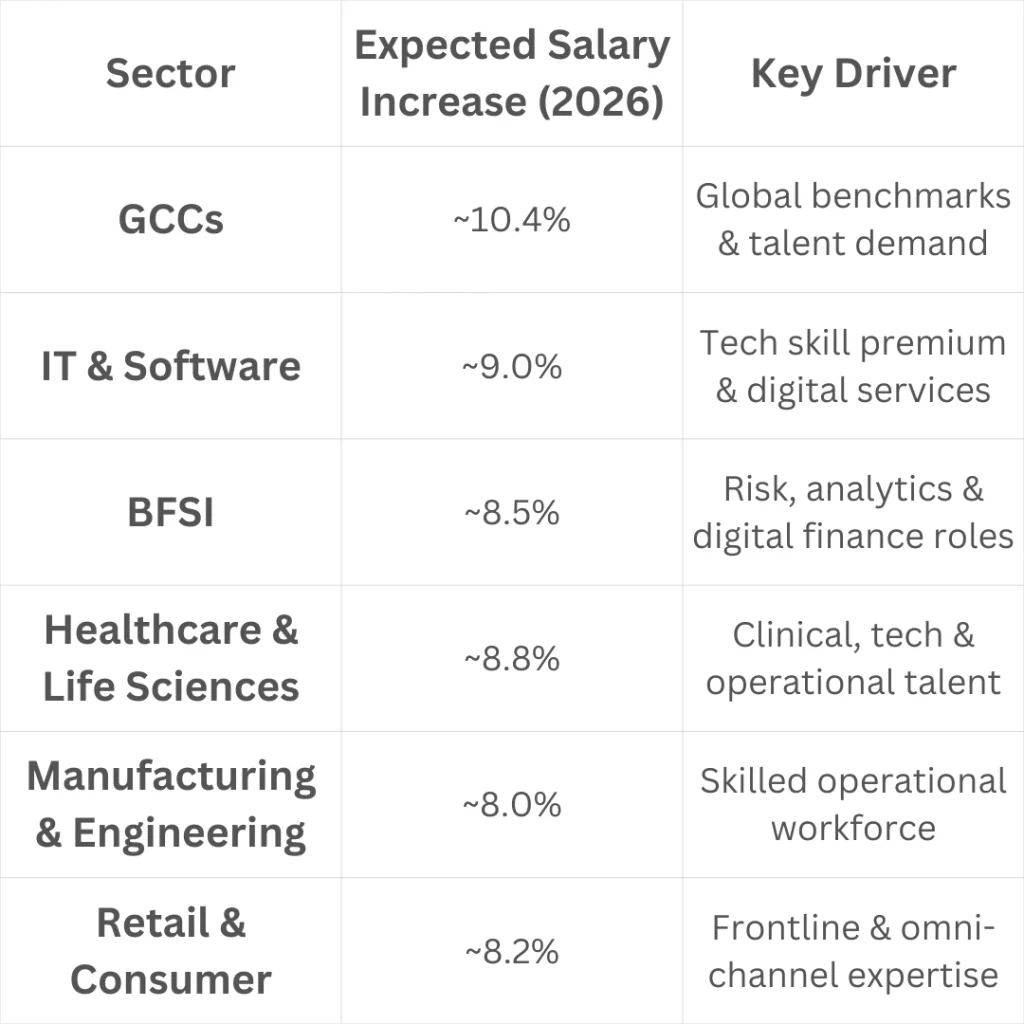
Note: These figures represent industry expectations and may vary by organisation size and geography.
Companies will need to revisit compensation frameworks, benchmark against peers, and ensure equitable pay structures that support retention without eroding profitability.
Across roles, pay hikes are increasingly linked to skills particularly digital, analytical, and leadership competencies rather than tenure alone.
Salary increases will likely be complemented with enhanced benefits such as variable pay, learning stipends, wellness programs, and location-based allowances.
Finance teams must incorporate higher payroll budgets, tax implications, and compliance costs into their FY26 planning.
Employees can expect:
✔ Better alignment of pay with market rates
✔ Enhanced compensation for high-demand skills
✔ More negotiation leverage for critical roles
✔ Greater emphasis on continuous learning & upskilling
At the same time, employees should assess total compensation — including bonuses, benefits, and career growth pathways not just base pay.
At Wisecor, we counsel organizations to approach the 2026 salary cycle with a balanced strategy that considers both employee needs and financial sustainability:
✔ Compensation benchmarking: Align salaries with industry trends
✔ Payroll costing & forecasting: Plan for increases without business stress
✔ Compliance readiness: Ensure statutory reporting and tax alignment
✔ Skills mapping & talent lifecycle strategy: Drive pay decisions with strategic workforce planning
Well-designed compensation frameworks help attract the right talent, retain performance drivers, and support long-term growth.
Salary hikes in 2026 are poised to be among the strongest in recent years, reflecting changing workforce dynamics, competitive talent demand, and evolving business priorities. For business leaders, the coming cycle is both an opportunity and a challenge demanding strategic planning, data-driven compensation decisions, and robust talent-management frameworks.
Wisecor remains committed to helping organisations navigate these changes with strategic insight, compliance support, and HR best practices
Subscribe to our newsletter and stay updated.