- Follow On:
- business@wisecor.in
- +918655715397
- Thane west, Maharashtra - 400604
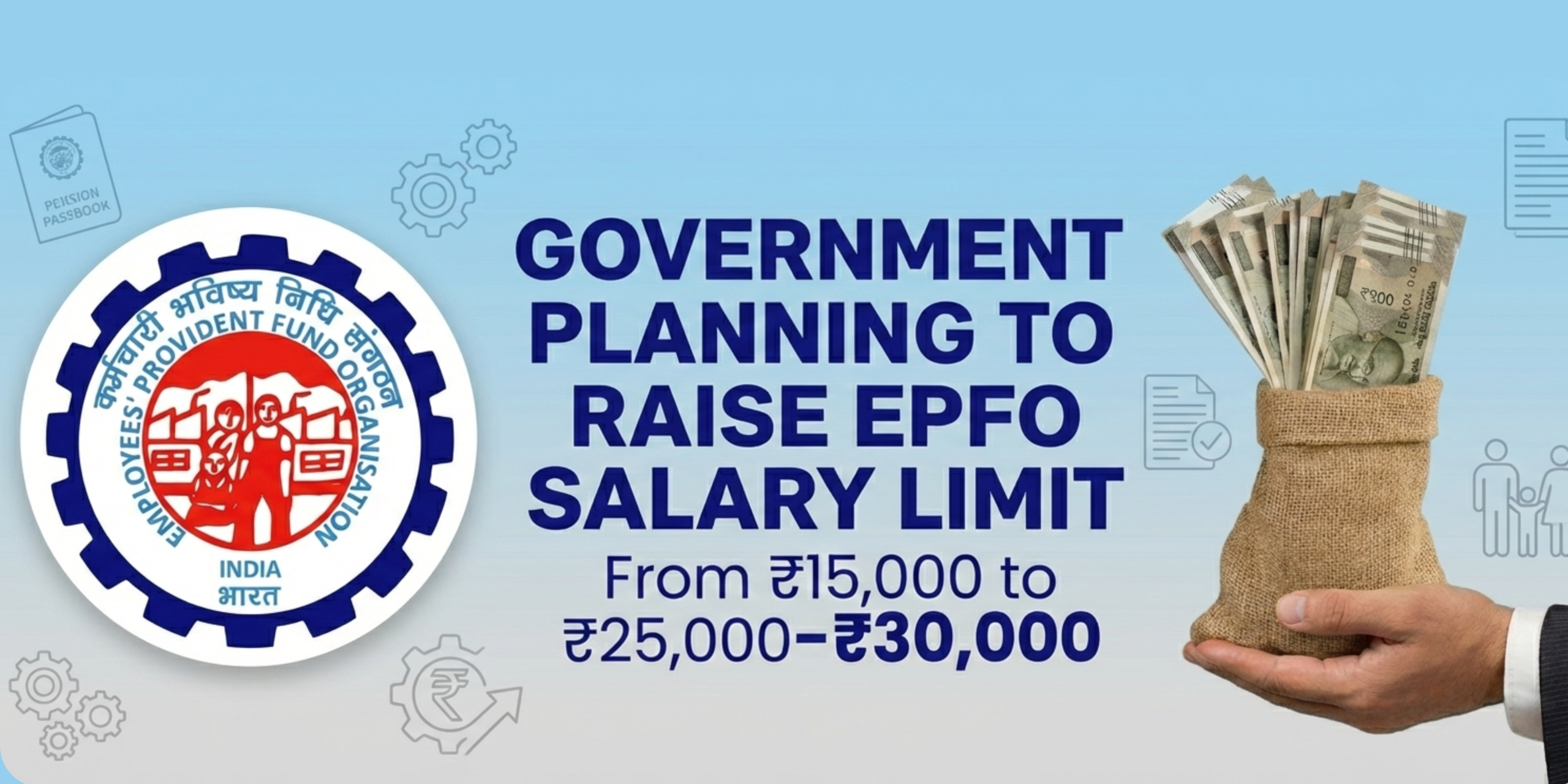
The Employees’ Provident Fund Organisation (EPFO) is reportedly considering an increase in the wage ceiling for provident fund contributions from the current ₹15,000 to a proposed range of ₹25,000–₹30,000.
If implemented, this would mark one of the most significant reforms in India’s social security framework, impacting payroll structures, employee take-home pay, and employer compliance obligations.
The proposal is aimed at expanding social security coverage, aligning retirement savings with current salary realities, and strengthening long-term financial security for India’s growing workforce.
• Higher PF Coverage:
An increased wage ceiling would bring a larger portion of an employee’s salary under mandatory PF contributions.
• Enhanced Retirement Savings:
Employees may see higher monthly PF deductions, leading to stronger retirement corpus over time.
• Increased Employer Contributions:
Employers would need to match higher PF contributions, impacting payroll costs and budgeting.
• Alignment with Wage Growth:
The revision reflects evolving salary structures and inflation-adjusted income levels.
• Awaiting Formal Notification:
The proposal is under discussion, with official confirmation expected through government notification.
For employees earning above ₹15,000 per month, the change could result in higher PF deductions.
While this may reduce immediate take-home salary, it significantly improves long-term retirement security and pension benefits under the EPF and EPS frameworks.
Employees may also need greater clarity on voluntary PF options, tax planning, and salary restructuring once the new limits are notified.
The proposed revision will require businesses to reassess payroll systems, employment contracts, and cost structures.
Key operational impacts include:
Payroll recalibration and system updates
Revised employer contribution liabilities
Compliance alignment with EPFO rules
Employee communication and change management
For organizations with large workforces or multi-location operations, timely readiness will be critical to avoid compliance gaps.
A higher EPFO wage ceiling will directly affect:
Monthly payroll processing
Statutory contribution calculations
Cost-to-company (CTC) structuring
Audit and reporting accuracy
Businesses relying on automated payroll and compliance systems must ensure their platforms are updated promptly once new thresholds are announced.
Wisecor supports organizations in navigating evolving statutory and payroll regulations through:
End-to-end payroll processing & compliance management
EPF, ESIC & statutory contribution advisory
Payroll system configuration & recalibration
Employee impact analysis & reporting support
Our teams continuously track regulatory developments to help businesses remain compliant, cost-efficient, and audit-ready.
While the EPFO salary limit revision is still under consideration, its potential impact on payroll, compliance, and workforce costs is significant.
Organizations and employees alike should stay informed and prepare for possible implementation in the upcoming policy cycle.
Wisecor will continue to share timely updates and expert insights as further clarity emerges from EPFO and the Ministry of Labour.
Subscribe to our newsletter and stay updated.