- Follow On:
- business@wisecor.in
- +918655715397
- Thane west, Maharashtra - 400604

In today’s fast-moving digital business environment, documents are not just files they are assets, evidence, and decision drivers. From invoices and contracts to HR records and compliance reports, businesses handle thousands of documents daily. Yet many organizations still rely on scattered folders, email attachments, or manual filing systems.
This is where a Document Management System becomes essential.
A modern document management system helps businesses store, manage, secure, and retrieve documents efficiently, while reducing errors, compliance risks, and operational delays. Whether you are a growing startup or an established enterprise, managing documents effectively directly impacts productivity, data security, and decision-making speed.
A Document Management System (DMS) is a digital platform designed to store, organize, track, and manage digital documents in a centralized environment. Instead of saving files across multiple devices or departments, all documents are stored in a centralized document repository with controlled access.
How a Document Management System Works
This approach replaces manual document handling with secure document storage, structured access, and intelligent workflows.
Traditional file management systems were designed for a time when data volume was limited and compliance requirements were simpler. Today, businesses face very different challenges.
Common Problems with Manual or Legacy Systems
A modern digital document management system addresses these challenges by offering cloud document management, automation, and enterprise-grade security.
One of the biggest advantages of a document management system for business is operational efficiency. When documents are easy to access, share, and manage, teams work faster and smarter.
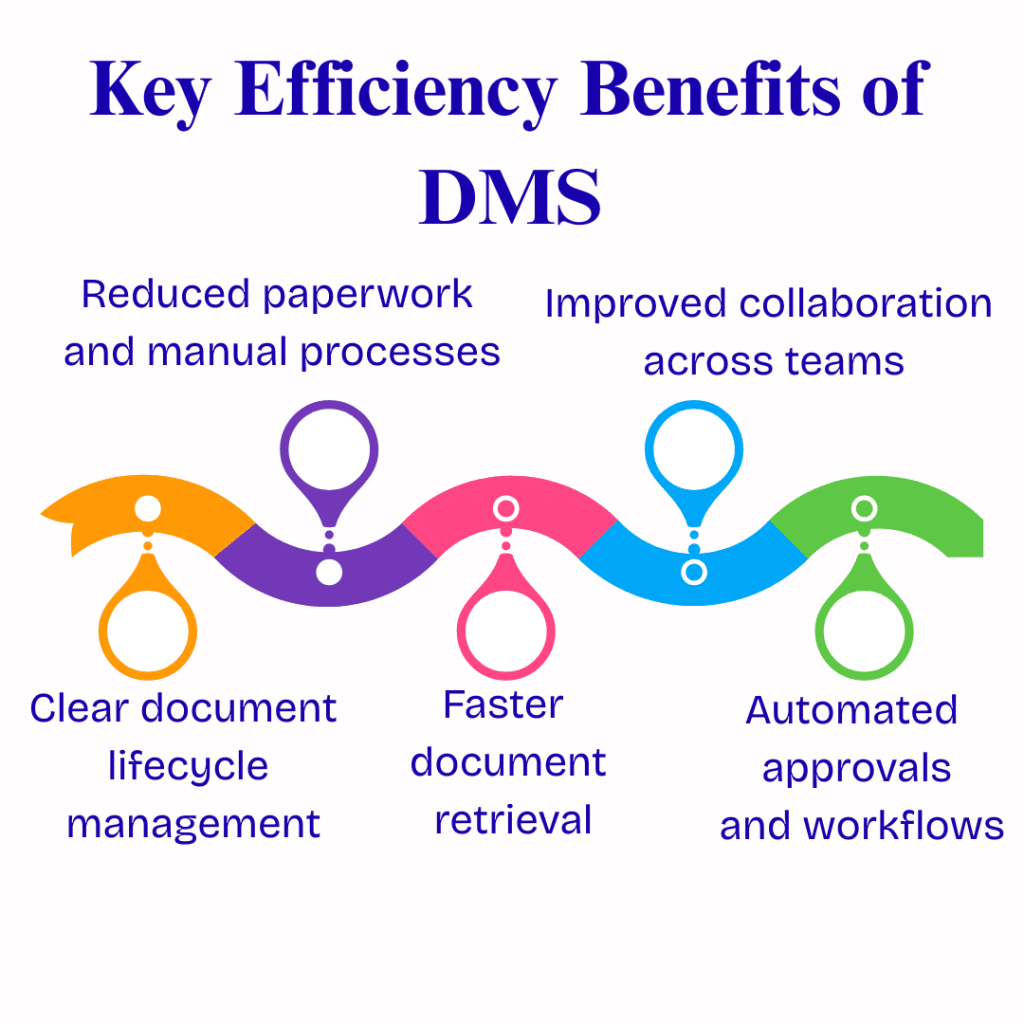
With document workflow automation, tasks that once took days can now be completed in minutes improving turnaround time and customer satisfaction.
A cloud-based document management system allows teams to access documents anytime, anywhere — without compromising security.
Benefits of Cloud Document Management
For global companies, startups, and finance or HR teams working across locations, online document management system solutions enable seamless operations.
Documents often contain sensitive financial, legal, HR, and client data. Without proper protection, businesses face data breaches, regulatory penalties, and reputational damage.
Security Features of a Secure Document Management System
A secure document management system ensures that only authorized users can access specific documents — reducing internal and external risks.
Have you ever worked on the wrong version of a document?
Without proper version control, teams often edit outdated files, leading to errors, rework, and confusion.
Benefits of Version Control
This feature is especially critical in finance, legal, and compliance-driven environments.
Modern teams require seamless collaboration. A document collaboration software enables multiple users to work together while maintaining security and structure.
Collaboration Features
With a centralized document repository, teams no longer depend on email attachments or manual sharing.
Regulatory requirements demand accuracy, transparency, and traceability. A compliance document management system helps organizations meet audit and regulatory standards.
Compliance Advantages
Industries like finance, healthcare, HR, and legal operations rely heavily on document lifecycle management to stay compliant.
Finance teams deal with high-volume, high-risk documents every day — invoices, bank statements, tax filings, audit reports, and statutory records. Without structured document control, even small errors can lead to compliance issues or financial loss.
A document management system software helps finance teams by:
With compliance document management, finance teams can confidently manage documents while meeting regulatory standards.
HR departments manage employee records, payroll data, contracts, onboarding documents, and performance files — all of which contain confidential information.
A document management system for business ensures:
By using a centralized document repository, HR teams improve efficiency while protecting employee data.
Compliance teams need fast access to accurate, well-organized documents. A missing file or outdated version can delay audits or lead to penalties.
A secure document management system enables:
This makes document storage software a critical tool for risk management and regulatory readiness.
Choosing the right DMS depends on business size, budget, and operational needs.
Enterprise Document Management System
SaaS Document Management System
Both options offer cloud document management, but SaaS platforms provide greater flexibility and scalability for modern teams.
An AI powered document management system goes beyond basic storage by automating document intelligence.
AI Capabilities Include:
These features significantly reduce manual effort and improve decision-making speed.
Manual document approvals slow down operations and increase dependency on individuals. With document workflow automation, processes become faster and more consistent.
Automated Workflow Benefits:
This makes workflow automation a key driver of productivity across departments.
When documents are spread across emails, desktops, and cloud drives, information silos form.
A centralized document repository solves this by:
Centralization is one of the strongest arguments for adopting a digital document management system.
Documents go through multiple stages — creation, review, approval, storage, and archiving.
Document lifecycle management ensures:
This structured approach improves governance and compliance.
A paperless office is not just environmentally friendly — it is operationally smarter.
Benefits of Going Paperless:
A modern document management system solution enables businesses to transition smoothly to a paperless environment.
Choosing the right document management system is not about selecting the most feature-heavy software—it’s about finding a solution that fits your business processes, security needs, and growth plans.
Start by identifying what problems you want to solve. If your teams struggle with scattered files, look for strong document storage software and a centralized document repository. If approvals are slow, document workflow automation should be a priority. For regulated industries, compliance document management and a reliable audit trail are essential.
Security must never be compromised. A secure document management system should include role-based access, encryption, and controlled sharing to protect sensitive data. Equally important is version control, which ensures teams always work on the most accurate and up-to-date documents.
Consider deployment options carefully. A cloud-based document management system offers flexibility, remote access, and scalability, while on-premise or enterprise solutions may suit organizations with strict data residency requirements.
Finally, ensure the system is user-friendly. Even the best document management system software will fail if employees find it complex. An intuitive interface encourages adoption, improves productivity, and delivers long-term value.
A reliable document management system combines security, accessibility, and automation to simplify how businesses handle documents.
Key Features to Look For
These features ensure documents are always accurate, secure, and easy to manage.
A document management system is used to store, organize, track, and manage digital documents securely while improving efficiency and compliance.
Yes. Modern cloud systems use encryption, role-based access, and audit trails to ensure high levels of data security.
Absolutely. SaaS document management systems are cost-effective, scalable, and ideal for small and growing businesses.
Version control ensures teams always work on the latest document and allows easy tracking of changes and edits.
Yes. Features like audit trails, controlled access, and secure archiving support compliance and regulatory audits.
A well-implemented document management system solution transforms how businesses operate. It reduces manual effort, improves collaboration, strengthens data security, and supports compliance. By replacing fragmented file storage with a structured, digital approach, organizations gain better control over information and make faster, more informed decisions. In a data-driven world, effective document management is no longer optional—it’s essential.
Subscribe to our newsletter and stay updated.