- Follow On:
- [email protected]
- +918655715397
- Thane west, Maharashtra - 400604
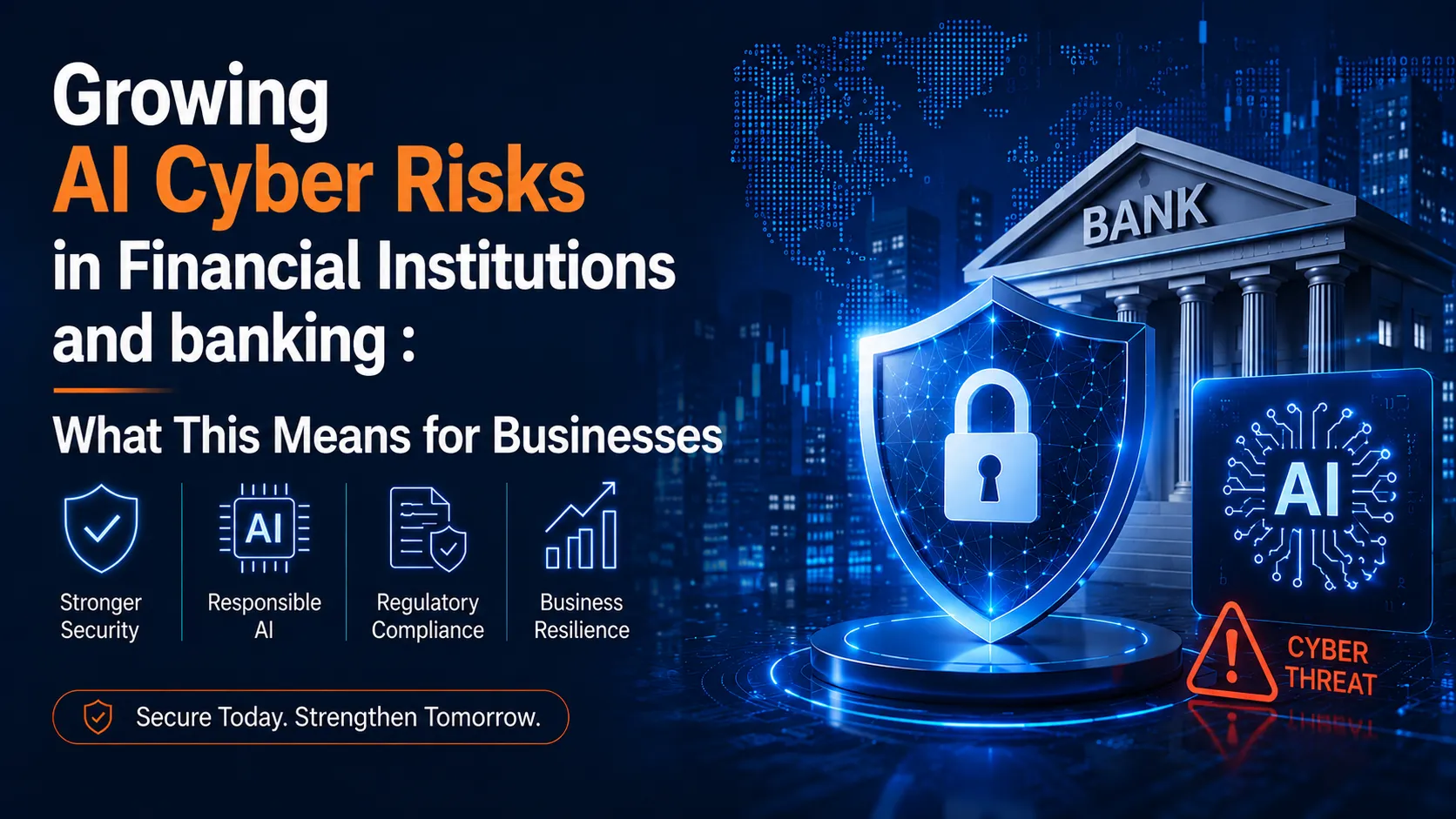
As artificial intelligence continues transforming the global financial ecosystem, concerns around AI-driven cybersecurity risks are rapidly increasing across banks, fintech companies, and financial institutions. With organizations adopting AI-powered systems for automation, fraud detection, customer service, analytics, and operational efficiency, regulators and enterprises are now placing greater emphasis on cyber resilience, data protection, and AI governance.
The growing integration of AI into financial operations has created both opportunities and new vulnerabilities. Industry experts believe that while AI can improve efficiency and decision-making, it can also expose businesses to advanced cyber threats if governance and security systems are not strengthened simultaneously.
AI-powered systems are becoming central to modern banking infrastructure. However, increased automation and interconnected digital systems have also expanded the cybersecurity risk landscape.
Some of the major concerns emerging across the financial sector include:
As financial institutions increasingly rely on machine learning and predictive systems, experts warn that weak governance or inadequate cybersecurity frameworks can create significant operational and reputational risks.
Banks and financial organizations manage massive volumes of confidential customer data, payment records, investment information, and transaction histories. This makes the sector one of the most targeted industries for cybercrime.
At the same time, rapid digitization has accelerated the adoption of:
While these technologies improve customer experience and operational speed, they also increase the number of potential entry points for cyber threats.
Industry analysts believe AI adoption can no longer operate independently from governance and compliance frameworks. Financial institutions are now expected to balance innovation with stronger controls, transparency, and operational oversight.
In response to growing cybersecurity concerns, banks and enterprises are increasing investments in enterprise-grade cybersecurity infrastructure and governance systems.
Organizations are strengthening focus on:
Financial institutions are deploying advanced monitoring systems to identify unusual activities, detect fraud attempts, and respond to cyber threats faster.
Businesses are introducing structured AI governance policies to ensure ethical AI deployment, accountability, transparency, and compliance readiness.
Regulators are emphasizing stronger controls over customer data management, cybersecurity audits, and operational reporting standards.
Companies are integrating cybersecurity planning into overall business continuity and risk management strategies.
Increased spending is being directed toward cloud security, identity management systems, access controls, and infrastructure resilience.
The shift reflects a broader realization that cybersecurity is no longer only an IT issue it is now a core business and financial risk management priority.
For businesses adopting AI technologies, the focus is rapidly moving beyond automation and efficiency toward secure and responsible implementation.
Organizations must now prioritize:
Businesses that fail to strengthen digital governance may face operational disruptions, compliance penalties, financial losses, and reputational damage in the future.
At the same time, companies that invest early in secure AI adoption and governance frameworks are likely to build stronger operational resilience and long-term trust.
As AI adoption accelerates across industries, organizations must ensure that innovation is supported by strong governance, compliance, and cybersecurity readiness.
At Wisecor, we help businesses strengthen operational processes through strategic finance support, compliance management, digital transformation planning, and governance-focused business solutions.
In today’s evolving digital environment, sustainable growth depends not only on adopting advanced technologies but also on managing the risks that come with them.
AI is rapidly reshaping the future of banking, finance, and enterprise operations. However, as businesses become more digitally connected, cybersecurity and governance will become equally critical to long-term success.
The future belongs to organizations that can balance innovation with security, compliance, and operational resilience. Businesses that proactively prepare today will be better positioned to navigate tomorrow’s evolving digital economy.
Subscribe to our newsletter and stay updated.