- Follow On:
- [email protected]
- +918655715397
- Thane west, Maharashtra - 400604
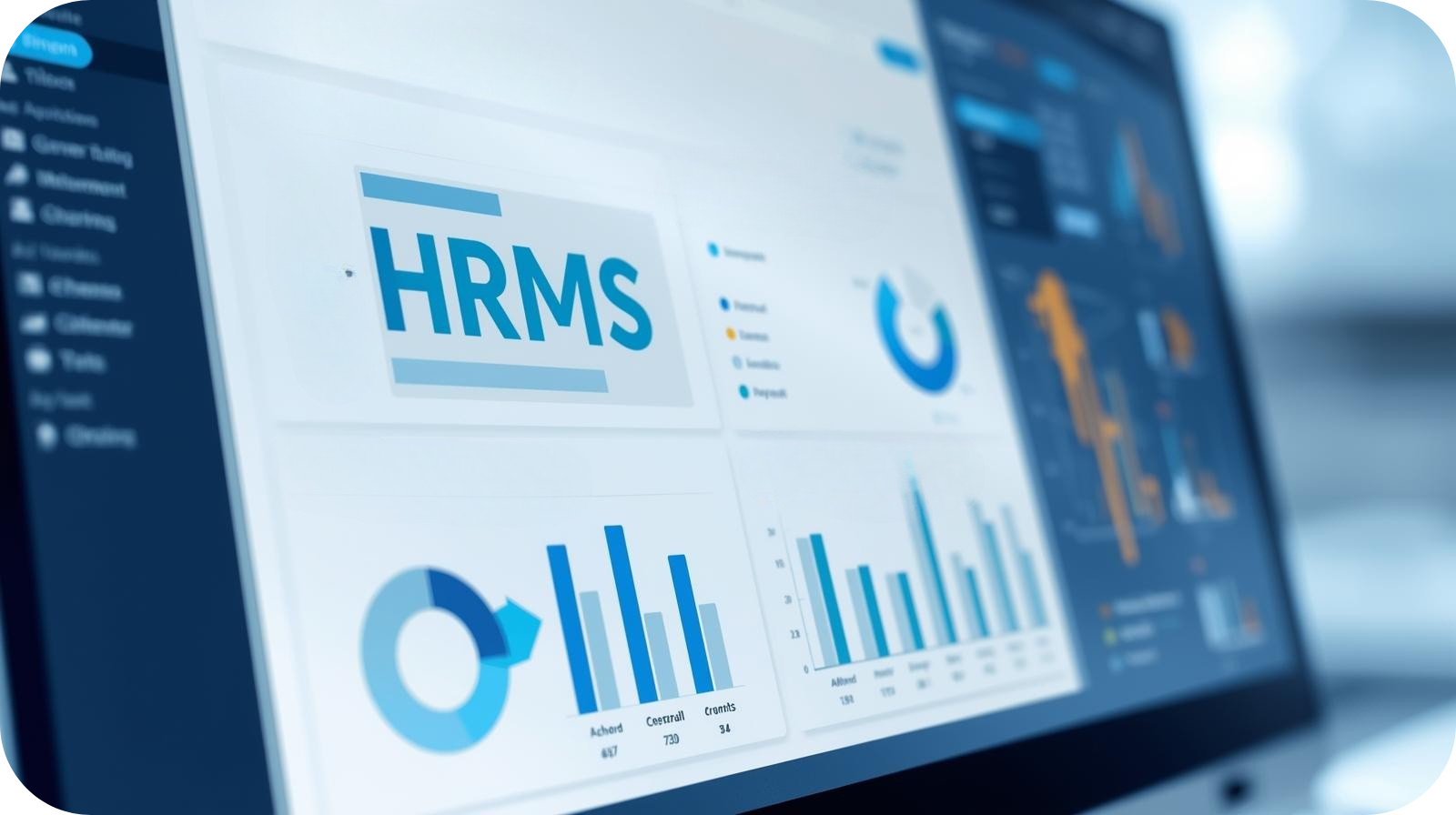
Understanding HR Software and Why It Matters
In today’s competitive business landscape, organizations of all sizes are embracing Human Resource Management Systems (HRMS software) to manage people, processes, and performance more effectively. Gone are the days when HR teams relied solely on spreadsheets, paperwork, and manual data entry. Modern HR technology has transformed HR into a strategic driver of growth rather than just an administrative function.
An HRMS is a powerful HR system designed to integrate and automate most of the essential HR tasks including payroll, recruitment, performance management, employee engagement, onboarding, compliance, and more in one unified platform. In simple terms, it’s HR software that helps HR professionals and business leaders streamline work so they can focus on the people side of business.
“HRMS software is not just a database or tool it’s the backbone of strategic human resources in any modern organization.”
Whether you’re a small business owner or a corporate HR leader, understanding the importance of HR technology is crucial in building a productive, engaged, and future-ready workforce.
A Human Resource Management System commonly called HRMS is a comprehensive software solution that centralizes HR processes and workforce data into a single digital platform. An HRMS typically covers modules such as employee records, payroll system, talent management, benefits administration, attendance tracking, compliance reporting, and people analytics.
At its core, HRMS software is designed to:
Many organizations today rely on HRMS as the foundation of their HR infrastructure especially as businesses scale, workforce expectations evolve, and the future of work continues to shift toward digital and hybrid models.
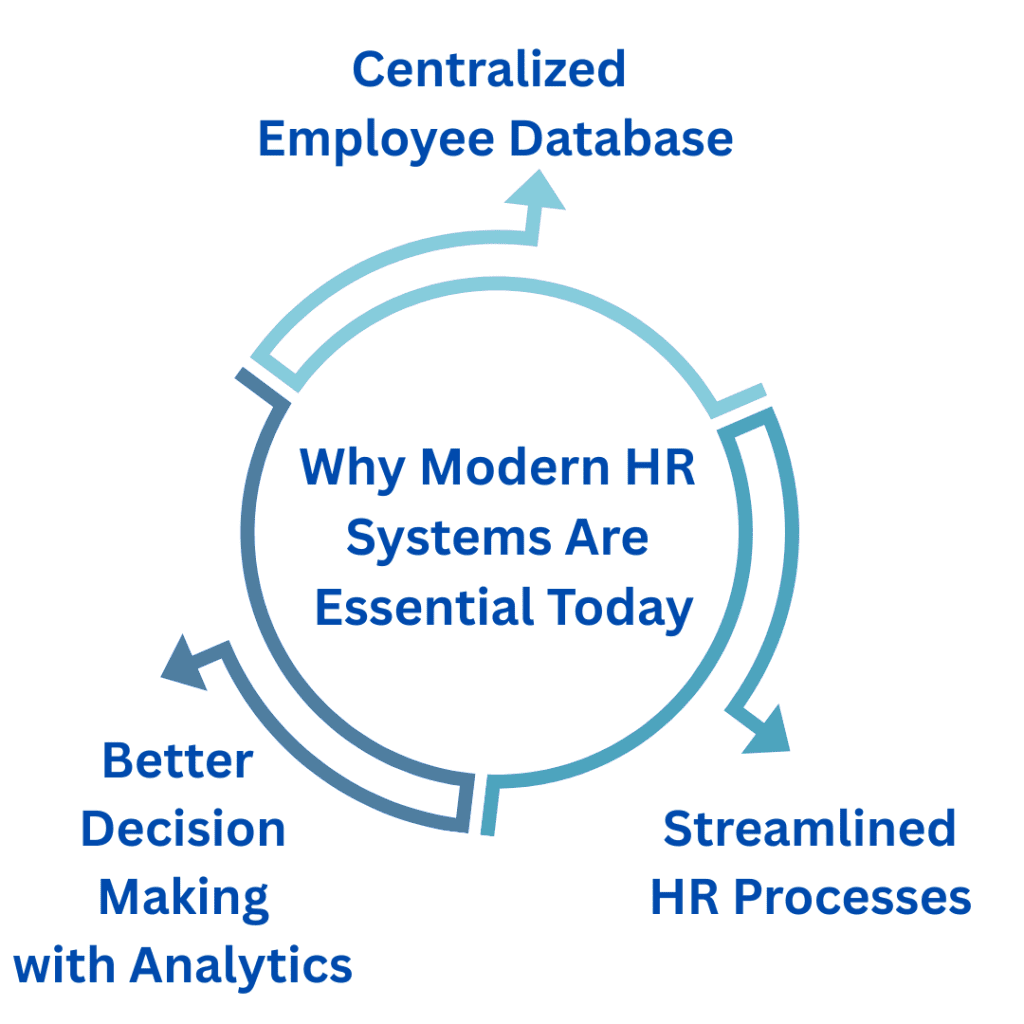
Traditional HR setups often scatter data across folders, spreadsheets, and emails. With HRMS, all workforce information — from personal details and skills to performance records and payroll data — is stored in one secure place. This centralization improves accuracy and reduces the risk of compliance errors.
Imagine automating tedious tasks like time-off requests, attendance tracking, payroll calculations, and benefits enrollment. HRMS software makes this possible, freeing HR teams to focus on strategic HR functions like talent management and workforce planning.
A key strength of modern HR systems is people analytics the ability to generate data-driven insights about employee performance, engagement, and turnover. These insights help HR leaders forecast talent gaps and take proactive measures to build a stronger workforce.
An HRMS isn’t just for HR tasks it’s a strategic enabler. By automating operational work like payroll and record keeping, HR teams can dedicate more time to:
In the next part, we’ll explore core HRMS features, including performance management, recruitment, payroll software integration, and how HRMS connects with broader strategic HR goals.
Employee Information Management
Centralized database to store and manage employee records, personal details, and job history.
Recruitment and Applicant Tracking
Streamlines job postings, candidate screening, interview scheduling, and hiring workflows.
Onboarding Management
Automates documentation, policy acknowledgment, and task assignments for new hires.
Payroll Management System
Ensures accurate salary processing, tax calculations, deductions, and statutory compliance.
Time, Attendance, and Leave Management
Tracks working hours, attendance, shifts, and leave requests in real time.
Performance Management
Supports goal setting, continuous feedback, and structured performance reviews.
Talent and Skills Management
Identifies employee skills, tracks development, and supports succession planning.
Employee Engagement Tools
Includes surveys, feedback systems, and self-service portals to enhance engagement.
Compliance and Policy Management
Maintains audit-ready records and ensures adherence to labor laws and regulations.
People Analytics and Reporting
Provides data-driven insights on workforce performance, engagement, and retention.
AI in HR Capabilities
Enables smart automation, predictive analytics, and intelligent recruitment support.
Self-Service HR Portals
Allows employees and managers to access information, apply for leave, and update records.
Traditional performance reviews often happen once a year and feel disconnected from real work. A modern HRMS transforms performance management into a continuous and transparent process.
By linking individual goals with organizational strategy, HRMS helps build a performance-driven culture while keeping employees motivated and accountable.
Employee engagement is directly linked to productivity, retention, and workplace culture. HRMS supports engagement by offering:
When employees can manage their own information and feel heard, it creates a more inclusive and transparent workforce environment.
One of the most valued features of HRMS is its integrated payroll system. Payroll software ensures accurate and timely salary processing while complying with tax laws and statutory regulations.
An effective payroll module helps:
By integrating payroll with attendance, leave, and performance data, HRMS eliminates duplication and manual effort.
As organizations grow, HR responsibilities extend far beyond hiring and payroll. Managing compliance, promoting diversity and equity, and making data-driven decisions become critical priorities. A modern Human Resource Management System plays a central role in supporting these advanced HR needs.
Let’s explore how HRMS software strengthens HR governance and elevates HR into a strategic business function.
Regulatory compliance is one of the most complex challenges HR teams face. Employment laws, payroll regulations, tax requirements, and labor standards vary by region and are frequently updated.
An HRMS helps organizations stay compliant by:
By embedding compliance into everyday HR processes, HR systems reduce the risk of penalties while ensuring consistent and fair workforce practices.
People analytics is the practice of using workforce data to make informed HR decisions. HRMS software collects and analyzes data across the employee lifecycle from recruitment to performance and retention.
With people analytics, HR leaders can:
Instead of relying on assumptions, organizations can use real insights to improve human capital management and workforce planning.
The integration of AI in HR has significantly enhanced the capabilities of modern HRMS platforms. Artificial intelligence helps automate repetitive tasks while delivering smarter recommendations.
Common AI-driven HRMS applications include:
AI-powered HR technology allows HR teams to shift their focus from administrative work to strategic human resources initiatives.
Building a diverse and inclusive workplace is a top priority for forward-thinking organizations. HRMS provides visibility and structure to support diversity and equity initiatives.
With HRMS, organizations can:
These insights help HR leaders create more transparent and equitable HR policies that align with organizational values.
The future of work is defined by hybrid models, remote teams, and evolving employee expectations. HRMS software enables organizations to adapt by offering:
By aligning technology with people strategy, HRMS supports long-term workforce resilience and business growth.
As businesses continue to evolve, adopting the right Human Resource Management System (HRMS) has become a strategic necessity rather than a technical upgrade. A well-implemented HRMS acts as a unified HR system that connects people, processes, and performance enabling HR teams to deliver measurable business value.
Before investing in HRMS software, organizations must understand what to look for and how it aligns with their workforce goals.
Selecting the right HRMS requires more than comparing features. It involves understanding your workforce needs, growth plans, and HR maturity level.
Start by identifying your priorities whether it’s payroll software, performance management, recruitment, or employee engagement. A scalable HRMS should support your current needs while adapting to future workforce changes.
Choose an HRMS that offers end-to-end HR solutions, including payroll system integration, talent management, onboarding, compliance, and people analytics. A unified platform ensures better data accuracy and smoother workflows.
An effective HRMS should be easy to use for both HR teams and employees. Self-service portals, mobile accessibility, and intuitive dashboards improve adoption and engagement across the workforce.
Compliance and data protection are non-negotiable. Ensure your HRMS supports statutory compliance, secure data storage, and audit readiness.
A modern HRMS empowers HR teams to move beyond transactional work and focus on strategic human resources. By leveraging people analytics, AI in HR, and workforce insights, organizations can:
In short, HRMS transforms HR from a support function into a growth partner.
An HRMS (Human Resource Management System) is HR software that automates and manages core HR functions such as payroll, recruitment, performance management, employee data, and compliance within a single platform.
HRMS uses surveys, feedback tools, performance data, and people analytics to track engagement levels, identify trends, and support targeted engagement initiatives.
Yes. Cloud-based HRMS solutions are scalable and cost-effective, making them ideal for small and mid-sized organizations looking to streamline HR operations.
HR software typically handles specific HR tasks, while HRMS software offers an integrated suite covering the entire employee lifecycle from hiring to payroll to performance reviews.
HRMS supports talent management by tracking skills, performance, learning needs, and career progression, helping organizations develop and retain top talent.
HR technology enables flexible work models, data-driven decisions, and employee-centric experiences all essential for adapting to changing workforce expectations.
Implementing a robust Human Resource Management System is no longer optional in a digitally driven workplace. With the right HRMS in place, organizations can unlock the full potential of their human capital, strengthen compliance, enhance employee experiences, and build a future-ready workforce.
Subscribe to our newsletter and stay updated.