- Follow On:
- [email protected]
- +918655715397
- Thane west, Maharashtra - 400604
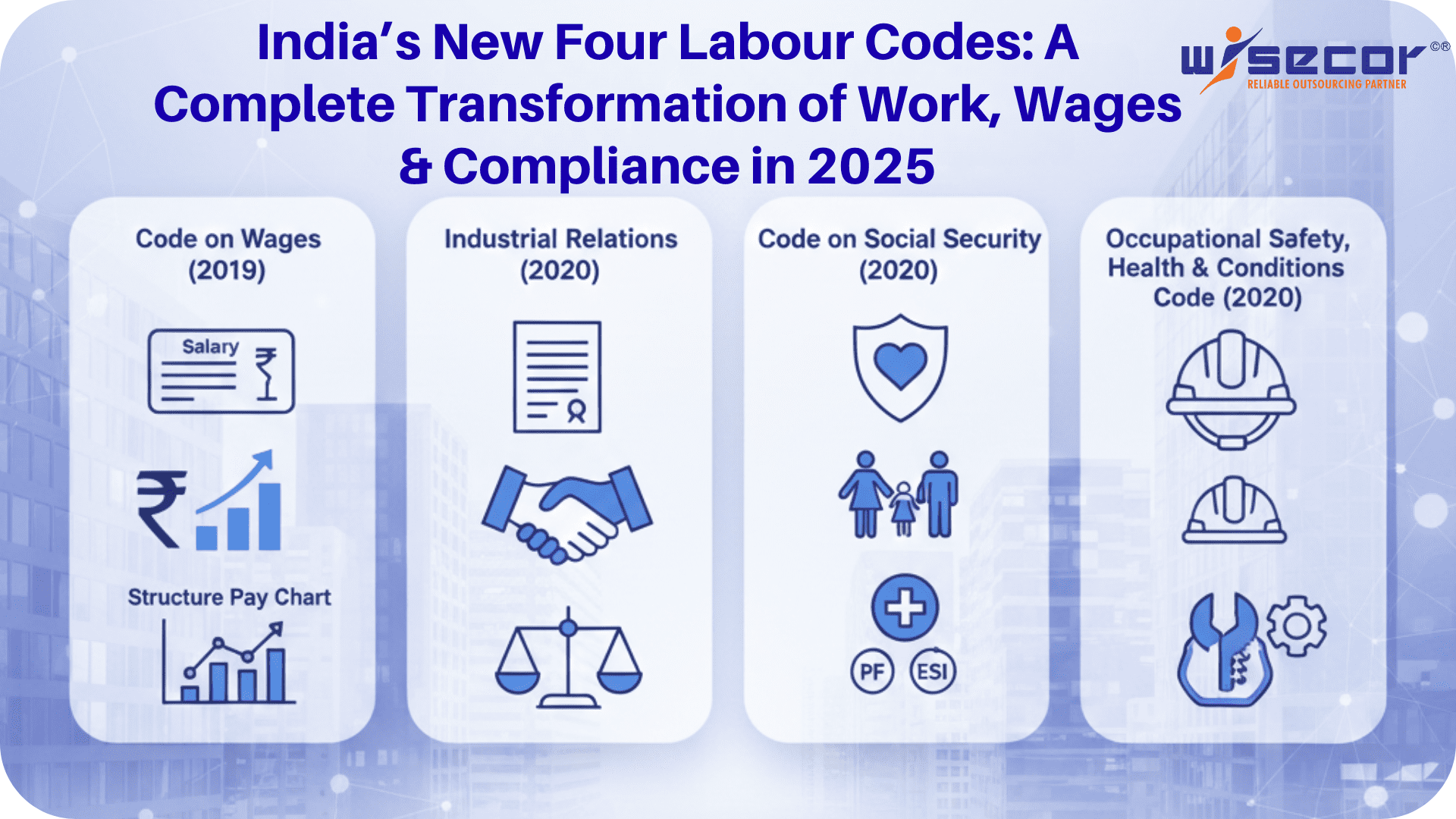
On 21 November 2025, India entered a new era of workforce governance with the official implementation of the four new Labour Codes. This marks one of the most sweeping labour reforms since Independence, consolidating 29 fragmented and often outdated labour laws into a modern, streamlined framework.
Reported across major national platforms like DD India and The Economic Times, the rollout of these Labour Codes represents far more than administrative restructuring. It signals a complete transformation of India’s labour landscape, a shift aimed at bringing clarity, transparency, and uniformity to employment laws that had long been viewed as complex, rigid, and difficult to navigate.
But the impact goes deeper than legislation.
For employees, the new codes strengthen social security, simplify compliance, ensure timely wages, and provide wider protections across formal and informal sectors.
For employers, especially MSMEs and large enterprises, the reforms introduce uniform rules, reduce compliance burdens, promote ease of doing business, and create a more predictable regulatory environment.
For the Indian economy, this reform aligns labour laws with the needs of a fast-evolving market shaped by digital transformation, gig-based work models, automation, and the rise of platform-based employment.
In simple words, the Labour Codes are not just a policy update they are a reimagining of the employer–employee relationship, designed to build a workforce ecosystem that is fair, future-ready, and globally competitive.
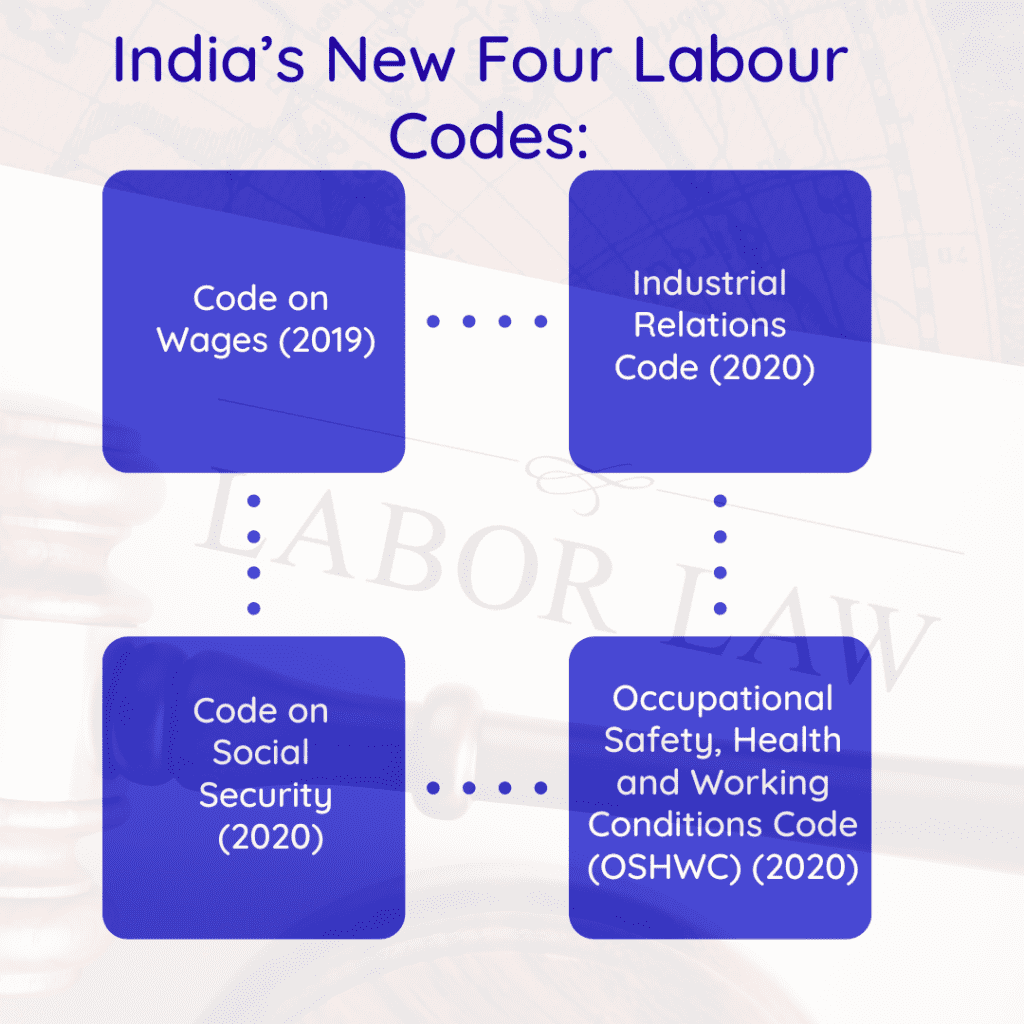
The four codes that have replaced the old legal mess are:
The implementation of India’s Four Labour Codes marks a structural transformation in how work, wages, safety, and social security are regulated. In this part, we break down each Code in a simple, humanized way highlighting what has changed, what benefits each stakeholder, and how these reforms aim to create a modern, inclusive workforce
For decades, India had multiple wage-related laws — each with its own definition of “wages.” This created confusion, disputes, and compliance challenges.
The Code on Wages solves this.
✔ Unified Definition of Wages
No more juggling multiple interpretations.
A single, uniform definition of wages ensures:
This is especially important for companies using complex CTC architectures.
✔ National Floor Wage for Fair Pay
The central government will set a national floor wage.
States cannot set minimum wages lower than this standard.
This ensures:
✔ Equal Pay for Equal Work
The Code strengthens the “equal pay without discrimination” mandate.
Employers must ensure:
This improves workplace fairness, especially for frontline and factory workers.
✔ Faster & Transparent Payment Methods
The Wage Code mandates:
This is a welcome relief for millions who earlier faced delayed wages.
The Industrial Relations Code modernizes how India handles:
This Code aims for balance protecting workers while enabling businesses to function smoothly.
✔ Flexible Hiring With Fixed-Term Employment
Companies can now hire fixed-term workers with the same benefits as permanent workers, including:
This gives employers hiring flexibility without compromising worker rights.
✔ Faster Dispute Resolution
The new system introduces:
This reduces the long delays previously common under older laws.
✔ Strikes & Lockouts Require Prior Notice
Workers must give 14 days’ notice before striking.
Similarly, employers must follow structured processes before lockouts.
This reduces sudden disruptions and encourages dialogue.
✔ Higher Threshold for Layoffs & Closure
Companies with up to 300 workers can restructure without government permission (up from 100 earlier).
This update aims to stimulate investment and ease of doing business while still protecting workers through compensation rules.
This is perhaps the most worker-centric reform.
The Code expands social security to categories that never had coverage before.
Major Provisions of the Social Security Code
✔ Gig & Platform Workers Finally Recognized
For the first time, India legally identifies:
They are now eligible for social security schemes, welfare funds, health benefits, and insurance.
This is a historic step for India’s digital workforce.
✔ Universalization of Social Security
The Code moves toward “social security for all”, including:
✔ Single Social Security Account (SSSA)
Workers will eventually receive a portable social-security account, making benefits accessible across:
This eliminates duplication and leakage.
✔ Gratuity for Fixed-Term Employees
Fixed-term employees no longer need to complete five years.
They become eligible proportionally, ensuring fairness for project-based workforces.
✔ Maternity, Disability & Old-Age Benefits Strengthened
The Code enhances several welfare schemes, including:
This is vital for long-term worker well-being.
The OSHWC Code consolidates 13 older safety and working-condition laws into one comprehensive framework.
It focuses on health, dignity, and safety, especially for high-risk occupations.
✔ Mandatory Free Annual Health Check-Ups
Especially for factory, construction, and gig-like occupations — improving early detection of health risks.
✔ Night Shift Permission for Women With Safety Norms
Women can work in night shifts, provided employers ensure:
This creates more opportunities while promoting safety.
✔ Welfare Facilities Standardized
Employers must provide:
✔ Single License for Multiple Locations
This helps industries like logistics, manufacturing, and services scale without paperwork hurdles.
✔ Digital Compliance & Inspections
The OSH Code encourages:
This modernizes compliance and reduces harassment.
When viewed individually, each Code improves one area.
But when implemented together, they create a transformed ecosystem:
This combination is what makes the 4 Labour Codes a historic policy shift.
Before this reform, India’s labour law landscape was incredibly fragmented:
By merging laws, the government aims to cut red tape, reduce compliance costs, and make labour regulation more coherent.
The nature of work in India has evolved dramatically:
The four Labour Codes are designed to catch up with these changes offering coverage and clarity where none existed before.
One of the government’s stated goals is to formalize more of India’s workforce.
With simplified rules, unified returns, and a single registration system, more workers and establishments can enter the formal economy which opens doors to social security, benefits, and safer working conditions.
Here are the major themes the new labour codes aim to address:
These reforms are not just for big companies they affect a broad spectrum of workers:
Early Concerns & Criticisms
Companies that prepare early will avoid compliance risks, payroll disruptions, and HR pressure. Here’s what to act on immediately:
✔ Reevaluate Salary Structures
✔ Update HR & Employment Policies
Revise policies for:
✔ Digitize Compliance Processes
Shift to:
This reduces errors and boosts transparency.
✔ Reclassify Workforce Categories
Align records for:
Ensure updated agreements, contribution tracking, and digital KYC.
✔ Strengthen Safety & Health Systems
Conduct audits and upgrade:
Critical for manufacturing, logistics, warehousing, healthcare & construction.
This is more than regulatory reform, it’s a structural shift. By consolidating old, overlapping laws into modern, cohesive legislation:
The Four Labour Codes represent a turning point in India’s labour ecosystem. They simplify compliance, improve worker welfare, and support the country’s vision of a modern, digitally empowered economy.
While the transition may seem complex, early preparation ensures smoother adaptation, better financial planning, and reduced risk.
With clear policies, digital systems, and expert guidance from partners like Wisecor, businesses can move into the new era of labour reforms with confidence, clarity, and compliance readiness.
Subscribe to our newsletter and stay updated.